The global gaming industry is growing fast, but so is the competition. With over 3.3 billion gamers worldwide and thousands of new game releases every month, it’s easy for even strong games to be overlooked.
Imagine you’ve developed a fantastic game yet struggle to reach the right audience or keep them engaged. In this scenario, smart marketing becomes essential. It goes beyond showing up to standing out through deep player insights, targeted campaigns, and meaningful community connections.
In this guide, you will explore seven effective marketing strategies for the gaming industry that help gaming studios increase visibility, acquire engaged players, and build lasting loyalty after launch.
Let’s dive into it!
Understanding the Modern Gamer: Who You Are Marketing To?
Before planning any campaign, it’s crucial to understand who is actually playing your game. Today’s audience is far broader than teenagers with consoles. Gamers now include working professionals, parents, and casual mobile users who play to relax between daily tasks.
Here are three major player segments marketers often focus on:
- Competitive Enthusiasts
- Always seeking improvement and challenge
- High interest in eSports, multiplayer modes, and seasonal events
- Likely to invest in performance-boosting items
- Social Explorers
- Enjoy games that help them connect and communicate
- Prefer co-op missions, community-driven spaces, and creative tools
- Strong advocates who drive organic word-of-mouth buzz
- Casual Mobile Players
- Play short sessions during breaks or travel
- Love simple controls and quick fun
- Respond well to rewarded ads and fair monetization
According to Newzoo, nearly 59.5% of all gamers primarily play on mobile, making it the top platform globally. This shift highlights how important it is to align marketing with where the audience actually spends time.
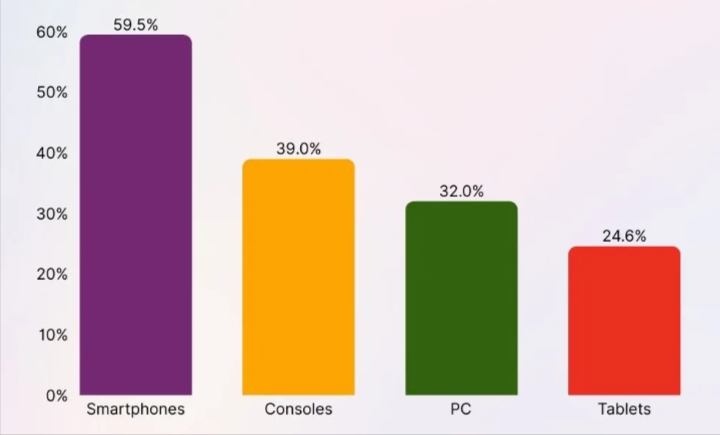
When you map clear player personas, your marketing becomes far more precise. From app store optimization to influencer partnerships, every decision works better because it speaks directly to what players care about.
Up next, we’ll dive into seven powerful marketing strategies that are helping game studios grow successfully in 2026 and beyond.
7 Proven Game Marketing Strategies That Work in 2026
To win attention and keep players coming back, you need a smart mix of gaming marketing strategies focused on discovery, community connections, and long-term engagement. Here are the approaches that are working right now.
1. Optimize App Store and Search Visibility
Most players discover new games through app stores or search platforms. That means your first impression, from how your game is named to how compelling your visuals look, directly influences installs. Strong ASO (App Store Optimization) ensures your game stands out, ranks for relevant queries, and converts browsing users into active players.
Key ways to improve visibility and downloads:
- Craft a compelling game listing: Use a clear and catchy name, engaging descriptions, and highlight your game’s core fun factor within the first few lines. Show what makes it unique without overloading users with jargon.
- Optimize keywords for discovery: Research what players search for (genre names, mechanics, emotional triggers, e.g., “zombie survival game” or “brain puzzle challenge”). Update keyword sets routinely as trends and competitor rankings shift over time.
- Test and refine your creative elements: App icons, banners, screenshots, and promo videos influence conversion as much as text. A/B test creative variations and track what style actually drives more installs from store visitors.
- Localize for different regions: Gaming is global. Translating your listing and adapting visuals to local culture increases trust and downloads in high-potential markets, especially for mobile game marketing strategies.
- Track performance and improve iteratively: Monitor ranking changes, tap-through rates, and conversion rates. Small updates can deliver significant improvements over time.
When app store visibility is optimized correctly, your game earns more high-intent discovery, which leads to better retention and stronger monetization results later in the player journey.
2. Scale Awareness with Influencer and Creator Partnerships
Influencers have become one of the most powerful channels to reach gamers authentically. By collaborating with creators who already have the trust and engagement of your target audience, game studios can increase visibility, spark excitement, and generate meaningful word-of-mouth for their games.
Choosing the right type of influencer matters:
- Micro-influencers: Typically 10k–50k followers, these creators have highly engaged audiences and can offer more personalized promotion.
- Mid-tier influencers: With 50k–500k followers, they balance reach with engagement, ideal for targeted campaigns.
- Macro-influencers: Over 500k followers, these influencers maximize reach but may require higher investment and strategic messaging to maintain authenticity.
Best platforms to consider are YouTube for gameplay walkthroughs, Twitch for live streaming and community engagement, and TikTok for viral short-form content. Each platform offers unique ways to showcase your game, such as tutorial videos, in-game highlights, or challenges that encourage participation.
Along with that, a collaboration structure is also crucial for campaign success. To do that, start by defining clear objectives like brand awareness, pre-registrations, or community growth.
Provide influencers with assets, guidelines, and early access to the game so they can craft authentic content. Tracking performance with metrics such as engagement rate, referral installs, and video views helps determine the ROI of each partnership.
By leveraging influencers and creators thoughtfully, game developers or studios can create a buzz that extends beyond traditional advertising and drives both installs and community engagement.
3. Build a Community-Driven Pre-Launch Ecosystem
Creating a strong community before your game launches is one of the most effective ways to generate excitement and ensure long-term engagement. Engaged communities not only provide valuable feedback but also help spread the word organically.
Key platforms for community building include Discord and Reddit. These spaces allow gamers to connect directly with developers, share ideas, report bugs, and participate in exclusive events. Engaging your audience early makes them feel valued and invested in your game’s success.
So, here are some practical strategies to implement:
- Beta Access Programs: Invite selected players to test the game before launch. This generates early feedback and creates a sense of exclusivity.
- User-Generated Content: Encourage your community to create fan art, game clips, or mods. Sharing their creations on social channels amplifies reach and builds loyalty.
- Challenges and Contests: Run pre-launch challenges such as level completion contests or creative submissions. Reward winners with in-game items or early access.
- AMA Sessions: Host live Q&A sessions with your developers to foster transparency and humanize the game behind the code.
Building a community-driven pre-launch ecosystem ensures that your game launches to an audience that is already excited and invested, reducing the risk of low initial engagement and maximizing the impact of your marketing strategies.
4. Acquire High-Intent Users with Playable and Rewarded Ads
Reaching players who are genuinely interested in your game requires more than just running generic ads. Playable and rewarded ad formats allow potential users to interact with your game before downloading it, giving them a taste of the gameplay and creating an immediate emotional connection. This approach attracts high-intent users who are more likely to engage, stay longer, and spend within your game.
For example, hyper-casual games benefit from short, interactive playable ads that highlight the core mechanic, while strategy and RPG games can leverage slightly longer demos showing progression systems or multiplayer interactions.
Rewarded ads, on the other hand, are effective for offering players in-game currency, exclusive items, or hints in exchange for watching promotional content, which drives both engagement and retention.
Here are a few key strategies to maximize the effectiveness of these ads:
- Ad Placement and Targeting: Focus on platforms where your target audience spends most of their time, such as mobile networks, gaming apps, and social channels. Use detailed demographic and behavioral targeting to reach users who are most likely to convert.
- Optimize for Retention, Not Just Installs: Track meaningful metrics like retention rate, session length, and return on ad spend instead of focusing solely on download numbers. High-intent users often cost more per install but generate higher lifetime value.
- Dynamic Creative Testing: Continuously test variations of playable ad experiences and rewarded offers to identify what resonates most with your audience. Adjust visuals, copy, and reward types based on performance data.
- Post-Install Engagement: Integrate deep links or onboarding flows directly from the ad experience to reduce drop-offs. Ensuring users can continue seamlessly from ad interaction to in-game activity strengthens their connection and encourages repeated play.
By strategically leveraging playable and rewarded ads, game developers can attract an audience that is both excited and motivated to engage deeply with their game, improving long-term retention and maximizing monetization opportunities.
5. Boost Retention with Live-Ops and Seasonal Events
Keeping players engaged beyond the first week requires thoughtful planning and a steady flow of fresh experiences. Live-operations, commonly known as Live-Ops, and seasonal events help maintain excitement by giving players reasons to return regularly.
These initiatives combine timed content, social challenges, and rewards that make the game world feel alive and evolving.
Key approaches to enhancing retention through Live-Ops and seasonal events:
- Event Calendars and Limited-Time Challenges: Design monthly or quarterly calendars highlighting seasonal quests, limited-time bosses, or exclusive collectibles. This encourages players to log in consistently and prevents churn.
- Rewarding Progression: Introduce tiered rewards for completing event milestones. Battle passes, special skins, or in-game currency that unlock progressively keep players motivated to continue engaging with the game.
- Social Engagement Opportunities: Enable cooperative or competitive events where friends or guilds can participate together. Encouraging social interaction not only strengthens community bonds but also increases session frequency.
- Thematic Storytelling: Tie events into the game’s narrative. Seasonal story arcs, holiday celebrations, or themed challenges make events more immersive and memorable.
- Real-Time Analytics Monitoring: Track participation rates, drop-off points, and reward redemption to understand what resonates most. Adjust the timing, difficulty, or reward structure to maximize engagement.
By implementing well-crafted Live-Ops and seasonal events turn your game into a dynamic experience where players feel rewarded for returning, and communities organically grow around shared experiences. This approach not only improves retention but also creates additional monetization opportunities through in-game purchases.
6. Improve Monetization with Real Player Motivations
Players spend money in games when they feel rewarded and in control, not when they feel pressured. To make monetization feel natural, it is crucial to understand the psychology behind why players make purchases and what motivates them to keep engaging with the game.
For example, imagine a casual mobile gamer who enjoys collecting cosmetic items versus a competitive player focused on advancing in ranked modes. Each type responds to different offers: cosmetic bundles and exclusive skins work for one, while timed boosters and progression packs appeal to the other.
In this way, games that align purchases with player goals see higher retention and revenue.
Therefore, incorporating limited-time events, personalized offers based on gameplay patterns, and meaningful rewards for in-game achievements can create a sense of excitement. And, players are more likely to invest when their spending directly enhances the experience rather than feeling like a shortcut.
7. Create an Omnichannel Presence to Build a Lasting Brand
In today’s competitive gaming market, having a presence on multiple platforms is essential for building a memorable and trusted brand. Gamers interact with content across mobile, console, and PC, so consistent messaging for each channel strengthens recognition and engagement.
One approach is to map out your content distribution for each platform.
For example, short gameplay clips and influencer shoutouts work best on TikTok and Instagram, while detailed tutorials and community streams perform better on YouTube and Twitch. PC and console players may respond more to newsletters, forums, and Discord announcements that highlight updates and seasonal events.
Here’s a table showing content type by platform (to help you understand better):
| Platform | Content Type | Engagement Goal |
| Mobile | Short videos, Reels, Stories | Awareness and installs |
| Console/PC | Live streams, Forums, Newsletters | Retention and loyalty |
| Social Media | Influencer clips, Challenges | Community growth and hype |
In this way, maintaining a consistent brand identity across all touchpoints ensures players feel connected regardless of where they interact with your game. Visual elements, tone of voice, and core messaging should remain uniform while adjusting for platform preferences.
With these seven gaming marketing strategies in place, game studios can effectively grow their audience, increase engagement, and boost revenue.
Conclusion
The gaming market rewards creativity supported by player data and thoughtful experimentation. Gaming studios that prioritize community, engaging creativity, and fair monetization build longer-lasting player relationships.
So, here’s a quick action plan for you to start this week:
- Run a 14-day creative test to identify top-performing ad concepts and placements.
- Seed a small pre-launch community on Discord to gather early feedback and build hype.
- Plan one Live-Ops event and an A/B test for a monetization bundle to measure retention and revenue impact.
If you want help executing any of these steps, Bizzware can run a focused 14-day growth audit and provide a prioritized roadmap for your game. Contact us, and one of our experts will be in touch with you!