By 2026, the mobile gaming industry is expected to reach $134.22 billion in revenue and continue growing at a steady 5.13% annually. This rapid growth has significantly intensified competition across app stores.
With thousands of new games launching each year, earning visibility has become increasingly difficult. Even well-designed games struggle when promotion strategies fail to align with player discovery behavior.
Many developers ask how to promote a mobile game in a market where attention is limited and acquisition costs continue to rise. The answer lies in focused, high-impact promotion methods.
This blog breaks down five effective ways to promote a mobile game, helping gaming studios attract the right players, improve installs, and build a sustainable, player-favorite game beyond launch.
What is Mobile Game Marketing?
Mobile game marketing involves promoting a mobile game to attract high-quality players at the lowest possible acquisition cost, while ensuring those players stay engaged and generate long-term value.
It is not only about installs, but also about acquiring users who actually play, retain, and spend.
With over 3.2 billion active mobile gamers worldwide and app stores hosting millions of games, discovery has become the biggest challenge for developers. Even most mobile games fail to retain users beyond the first month, often due to poor targeting and weak launch visibility.
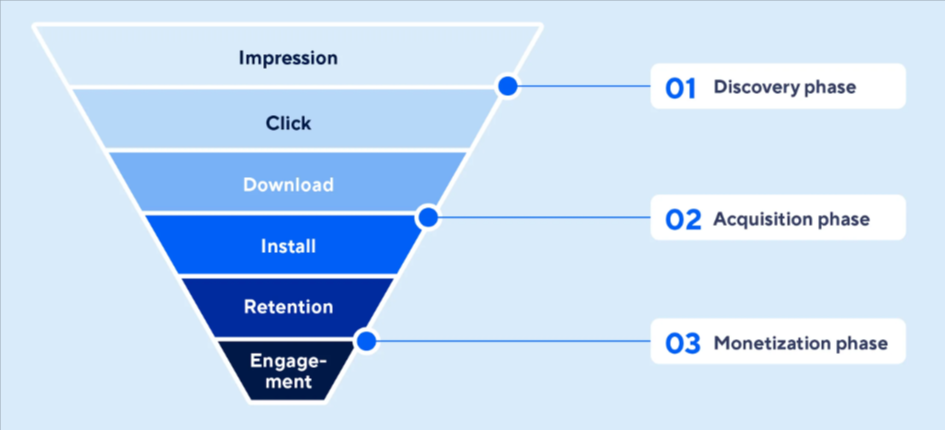
At its core, mobile game marketing answers a critical question: How do you make the right players notice your game at the right time, and convince them it is worth downloading over thousands of alternatives?
So, in your mind, key goals of mobile game marketing should include:
- Acquiring players who match your game genre and monetization model.
- Re-engaging inactive or lapsed users through remarketing.
- Encouraging in-app purchases, subscriptions, or ad interactions.
- Building long-term retention through community and live operations.
Mobile game marketing spans multiple stages, not just launch. It starts with pre-launch awareness, continues with user acquisition and app store optimization, and extends into retention, monetization, and community building. Each stage directly impacts metrics like CPI, LTV, retention rate, and ROAS.
Gaming studios that treat marketing as an ongoing growth system, rather than a one-time campaign, consistently outperform competitors. This approach helps games survive longer, scale faster, and build loyal player communities instead of short-term download spikes.
Now, here are some strategies that most successful mobile gaming studios use. We will explore them one by one.
1. Build Pre-Launch Buzz Before Your Game Goes Live
Pre-launch promotion sets the foundation for a successful mobile game launch. Games that build awareness early often see stronger day-one installs and better algorithmic visibility in app stores.
Pre-launch buzz helps validate demand before launch. It allows gaming studios to test messaging, creatives, and positioning while collecting early feedback from potential players.
According to AppsFlyer, games that run pre-launch campaigns can reduce cost per install by up to 30 percent during launch due to higher intent audiences.
Key pre-launch tactics that consistently perform well:
- App store pre-registration to capture early intent users.
- Closed beta testing to gather feedback and social proof.
- Short-form gameplay teasers on social platforms.
- Early community setup on Discord or Reddit.
Pre-launch buzz also improves launch momentum. Early installs, reviews, and engagement signals help app store algorithms push your game to wider audiences organically.
Studios that skip pre-launch marketing often rely entirely on paid ads post-launch. This increases acquisition costs and limits early visibility in a highly competitive environment.
2. Optimize App Store Presence for Maximum Visibility
App stores are the primary discovery channel for mobile games. Most players find new games through search, featured sections, or category rankings rather than external ads.
According to Apple Search Ads data, nearly 65 percent of app downloads come directly from App Store searches, making optimization critical for organic installs.
App Store Optimization focuses on improving how your game appears and converts within the store. It combines keyword relevance, visual appeal, and trust signals to drive installs.
A strong game app title and subtitle help your game rank for high-intent keywords. Descriptions should clearly explain gameplay, progression, and value within the first few lines.
Visual assets play a decisive role in conversion. Icons, screenshots, and preview videos must instantly communicate genre, excitement, and core mechanics without requiring explanation.
Ratings and reviews also influence install decisions. Games with higher ratings consistently outperform competitors in both search visibility and conversion rate.
Key ASO elements that impact performance:
- Keyword-optimized title, subtitle, and description.
- High-quality screenshots showing real gameplay.
- Short preview videos highlighting core mechanics.
- Consistent review and rating improvement strategy.
ASO is not a one-time task. Regular updates, creative testing, and keyword monitoring help maintain visibility as competition and player behavior evolve.
Studios that invest in ASO reduce dependency on paid acquisition. This leads to lower cost per install and stronger long-term organic growth.
3. Use Paid User Acquisition to Scale Installs Faster
Paid user acquisition is key for scaling mobile games quickly because relying solely on organic discovery can be too slow in competitive categories. Paid campaigns give predictable volume when you need it most.
Rather than claiming a specific percentage of installs come from paid channels, industry data shows paid campaigns often boost visibility and organic discovery by increasing overall download velocity and app store ranking. Paid installs can also lead to roughly 1.5 times more organic installs through increased visibility.
Platforms like Google App Campaigns, Meta Ads, TikTok Ads, and Unity Ads help game studios reach segmented audiences based on behavior, interests, and install likelihood. These platforms also optimize delivery toward users more likely to engage beyond the install.
Paid UA should focus on quality instead of just install volume. Optimizing toward post-install events like retention and in-app purchases helps lower overall cost per engaged user and improves long-term revenue potential.
High-performing paid UA strategies include:
- Testing multiple ad creatives and formats.
- Optimizing campaigns for retention and key in-app events.
- Aligning ad messaging with actual gameplay experience.
- Scaling systematically only after performance stabilizes.
When games are balanced with organic efforts like ASO and community engagement, a paid acquisition strategy can significantly accelerate momentum while maintaining cost efficiency and long-term growth.
4. Leverage Influencers and Gaming Creators
Influencer marketing works because players trust other players more than ads. Seeing real gameplay from a creator feels authentic and reduces hesitation before installing a new mobile game.
Gaming creators help games reach niche, high-intent audiences. Their followers already enjoy similar genres, making influencer-driven installs more qualified than broad, untargeted traffic.
According to Influencer Marketing Hub, gaming is one of the highest-performing influencer categories, delivering stronger engagement rates compared to traditional social advertising.
Short-form platforms like YouTube Shorts, TikTok, and Instagram Reels are especially effective for mobile games. Quick gameplay clips highlight mechanics, progression, and fun within seconds.
Influencer campaigns perform best when creators have creative freedom. Forced scripts reduce credibility, while honest gameplay reactions improve trust and conversion.
Effective influencer strategies include:
- Partnering with mid-tier creators for better engagement and cost control.
- Focusing on gameplay showcases instead of polished trailers.
- Tracking installs and retention using creator-specific links.
- Reusing high-performing influencer content as paid ads.
When executed correctly, influencer marketing builds awareness, credibility, and installs simultaneously. It also strengthens long-term brand presence within gaming communities.
5. Build and Grow a Strong Player Community
Community-driven games retain players longer because they create emotional attachment. Players stay not just for gameplay, but for social interaction, recognition, and shared progress with others.
Strong communities reduce churn and increase lifetime value. According to Discord, gaming communities actively influence retention by keeping players engaged outside the game environment.
Platforms like Discord, Reddit, and in-game chat act as growth engines. They enable direct communication, feedback loops, and real-time engagement with your most invested players.
A well-managed community also supports organic promotion. Players share updates, invite friends, and generate content that extends reach without increasing acquisition costs.
Effective community-building tactics include:
- Creating a dedicated Discord server before or during launch.
- Hosting in-game events, rewards, and limited-time challenges.
- Highlighting player achievements and user-generated content.
- Listening to feedback and communicating updates transparently.
When you build a gaming community, it mainly turns your players into brand ambassadors sharing your game across their network and communities. Over time, this trust-driven promotion becomes one of the most sustainable ways to grow a mobile game.
Conclusion
Promoting a mobile game successfully requires more than visibility. It demands the right mix of timing, targeting, and player-focused strategies across launch and post-launch phases.
From pre-launch buzz and ASO to paid acquisition, creators, and community building, each approach plays a role in attracting quality players and sustaining long-term growth.
The most successful games treat marketing as an ongoing system, not a one-time launch activity. This mindset improves retention, monetization, and player loyalty over time.
If you want expert support to promote your mobile game effectively, Bizzware helps gaming studios design data-driven marketing strategies that drive installs, engagement, and scalable growth.
Contact us, and we’ll create an effective game marketing plan for your successful game launch!