Launching a great mobile game is no longer enough to guarantee success.
With millions of games competing for attention across the App Store and Google Play, discoverability has become one of the biggest challenges for developers and publishers today.
At the same time, user acquisition costs have continued to rise. This is where app store optimization for games becomes a critical long-term strategy that helps games attract players organically through search and store visibility.
App Store Optimization (ASO) is not just about ranking higher for keywords. It is about positioning your game in front of the right players, communicating its value instantly, and converting store visitors into active users.
In this guide, you will learn how ASO works specifically for mobile games, what makes gaming ASO different from regular apps, and the proven strategies studios use to improve rankings, downloads, and long-term player acquisition organically.
What Is App Store Optimization (ASO) for Games?
App store optimization for games (ASO) is the process of improving how your mobile game appears, ranks, and converts within app stores like Google Play and the Apple App Store. It focuses on optimizing store listing elements so players can discover your game and decide to install it.
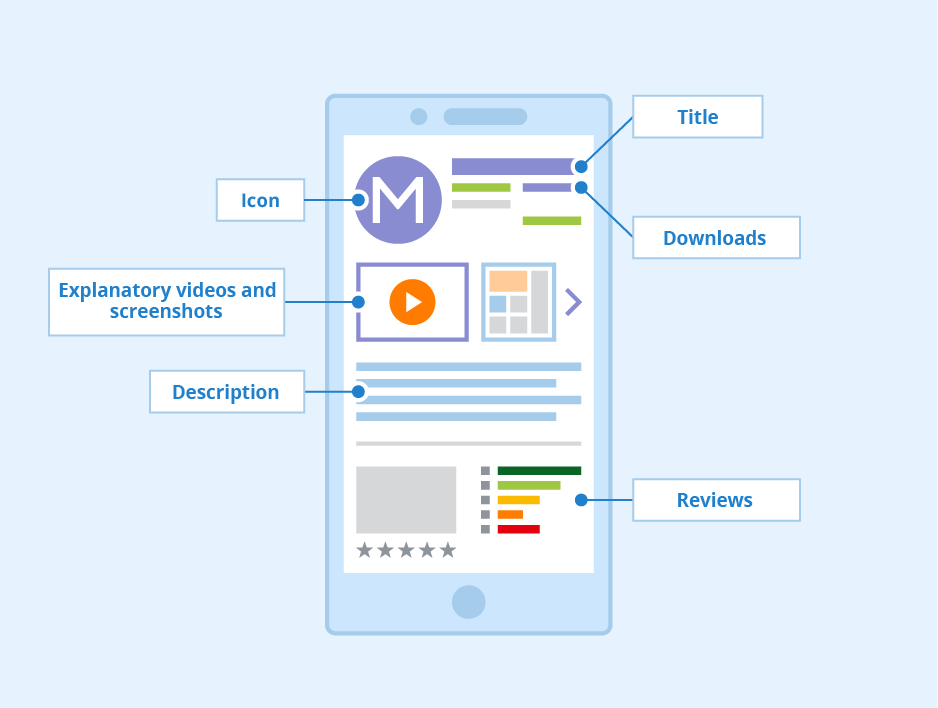
Unlike traditional marketing channels, ASO works at the exact moment when install decisions are made. When players search for a game, app store algorithms evaluate keywords, visuals, engagement signals, and listing quality before deciding which games receive visibility.
A strong ASO strategy strengthens three key areas:
- Visibility through higher keyword rankings and category placement
- Conversion by presenting gameplay value in a compelling way
- Install growth driven by consistent organic discovery
In mobile games, ASO functions as an ongoing growth system that supports long-term visibility and sustainable player acquisition inside competitive app marketplaces.
Why ASO Is Important & How It Is Different from App ASO?
To understand why ASO is important today, is to first see why it matters commercially. In 2023, mobile gaming generated over $92 billion in revenue globally, making it the largest gaming segment worldwide.
At the same time, competition inside app stores continues to intensify, while paid user acquisition costs for mobile games often range between $2 to $4 per install, depending on genre and geography.
For studios, this creates a clear growth challenge. Relying only on paid campaigns compresses margins, especially when retention and lifetime value fluctuate. App store optimization for games directly addresses this gap by building sustainable organic visibility.
When executed strategically, ASO benefits gaming studios in measurable ways:
- Reduces long-term dependency on paid installs through advertising.
- Improves store conversion rates without increasing ad budgets.
- Attracts higher-intent players actively searching by genre or mechanics.
- Strengthens games ranking through consistent organic engagement.
However, optimizing a game is not the same as optimizing a productivity or utility app.
In gaming, player decisions are emotional and experience-driven, which changes how ASO should be approached. This is the difference shown between gaming ASO and the other apps:
- Search Intent Is Different: Game players search using genre and gameplay terms such as strategy, idle, survival, or multiplayer. App users search for functional outcomes.
- Visual Assets Influence Conversion More Strongly: Screenshots and preview videos often determine installs within seconds because players evaluate entertainment value immediately.
- Messaging Focuses on Gameplay Promise: Game listings must communicate progression, competition, or immersion rather than listing technical features.
- Content Updates Impact Visibility More Frequently: New seasons, events, or gameplay additions refresh store engagement signals in ways that traditional utility apps rarely experience.
Recognizing these differences allows studios to approach ASO as a growth system aligned with player psychology instead of treating it as a basic metadata adjustment.
ASO for Games: A Guide To Win Your Game Organically
Winning installs organically is not about luck or trends. It comes from executing app store optimization for games through strategic research, precise positioning, and conversion-focused execution. Let’s look at how ASO for games can be done right.
Step 1: Market Research for Your Mobile Game ASO
Before optimizing for keywords or visuals, strong ASO begins with understanding the market your game is entering. Market research reveals demand gaps, player expectations, and realistic ranking opportunities within your genre.
According to Apple, nearly 65 percent of app store downloads come after a search and browse discovery, showing that understanding category behavior directly influences organic growth potential before launch decisions are finalized.
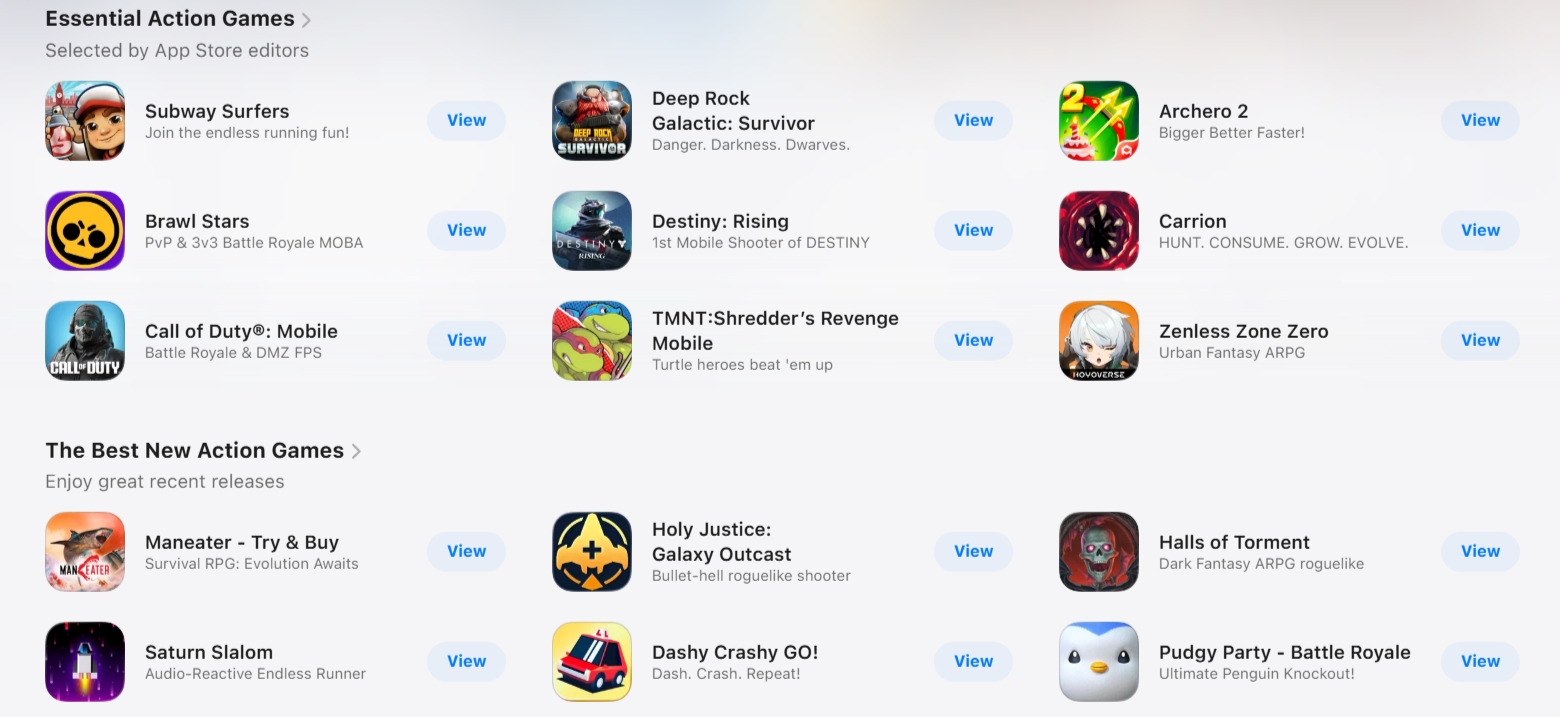
Here are the core areas to focus on when conducting market research:
- Analyze Genre Competition
Start by studying top-ranking games in your category. Notice their gameplay styles, art direction, monetization patterns, and how their store pages position the experience.
- Understand Player Expectations
Read user reviews on competitor game listings. Players often highlight frustrations, desired features, and reasons they install or uninstall similar games. These insights reveal what players care about most.
- Explore Keyword Landscape
Search your core genre terms within both the App Store and Google Play. Track autocomplete suggestions, recurring words across listings, and which keywords top games consistently rank for.
- Identify Market Opportunities
Look for gaps where demand exists, but competition is lower. For example, if most strategy games highlight competitive PvP, a focus on cooperative gameplay or idle progression may appeal to a different audience.
By basing your ASO strategy on real market signals instead of assumptions, you can position your game where players are already looking, which significantly improves organic visibility and installs over time.
Step 2: Identify the Right Target Audience for Your Game
Many studios assume their game is built for “everyone.” In reality, successful app store optimization begins when you understand exactly who is most likely to install and keep playing.
A mobile game rarely attracts one single type of player. Instead, it appeals to multiple audience segments connected by shared motivations such as competition, relaxation, creativity, or progression.
Player motivation plays a major role in ASO decisions because it influences both search behavior and conversion triggers. Players searching for a relaxing puzzle experience behave very differently from players searching for competitive multiplayer action.
Some common player motivation groups include:
| Motivation Type | What Players Look For |
| Competition | Rankings, PvP battles, leaderboards |
| Progression | Leveling systems and long-term rewards |
| Social Interaction | Co-op gameplay and community features |
| Creativity | Customization and expression options |
| Exploration | Open worlds and discovery elements |
| Quick Entertainment | Short sessions and instant gameplay |
One game can attract multiple motivations at once. For example, a strategy game may appeal to competitive players seeking mastery while also attracting planners who enjoy long-term progression systems.
To identify your real audience, focus on observation rather than assumptions:
- Study reviews of similar games to understand player expectations.
- Analyze communities on Discord, Reddit, and YouTube comments.
- Observe which gameplay moments are highlighted in competitor creatives.
- Look at retention discussions to understand why players stay or leave.
When audience understanding becomes specific, ASO decisions become more sharper. Keywords align with real search intent, creatives speak directly to player desires, and store listings feel relevant from the first impression.
Step 3: Build the Right Keyword Strategy
Keywords form the foundation of app store optimization for games because they connect what players search with how your game appears inside app store results.
In gaming, players search using genre names, gameplay mechanics, emotions, and themes, which means your keyword strategy must reflect how real players describe experiences, not developer terminology.
Core keyword categories to focus on:
- Genre Keywords
Examples include strategy, idle, puzzle, racing, or RPG. These define your primary discovery space and category competition.
- Gameplay & Mechanic Keywords
Terms like multiplayer, survival, co-op, turn-based, or sandbox refine intent and help attract players looking for specific play styles.
- Experience-Based Keywords
Words such as relaxing, competitive, offline, or fast-paced capture emotional intent and often improve install relevance.
- Long-Tail Keywords
Specific phrases like “offline strategy war game” or “idle fantasy battle simulator” usually face lower competition and attract more qualified players.
Once your keyword pool is ready, implement it using a structured approach:
Step 1: Collect Real Search Terms
Search your genre inside the App Store and Google Play. Record autocomplete suggestions and commonly repeated phrases across top-ranking games.
Step 2: Study Competitor Metadata
Review titles, subtitles, and descriptions of leading competitors to identify patterns in keyword positioning without copying their messaging.
Step 3: Evaluate Keyword Strength
Use ASO tools to check search volume and competition levels. Avoid selecting only high-volume keywords dominated by established publishers.
Step 4: Build a Balanced Keyword Mix
Combine broad genre terms for reach, mechanic-based keywords for precision, and long-tail phrases for easier ranking opportunities.
Step 5: Map Keywords Correctly
Place primary keywords in the game’s title and subtitle, and distribute supporting keywords naturally within the description to maintain readability and relevance.
When structured this way, your keyword strategy aligns with how players search, making it easier for the right audience to discover and choose your game.
Step 4: Spy Competitors to Find Your Hidden Audience
Once your keyword strategy is defined, competitor analysis helps you understand why certain games consistently dominate search results while others remain invisible despite similar gameplay quality.
In competitive genres, rankings are rarely accidental. They are shaped by positioning, keyword structure, visual storytelling, and how well the listing aligns with player intent.
For example, search “battle royale game” inside the App Store or Google Play. Well-known games like Free Fire India or PUBG Mobile appear prominently, yet smaller games such as “Farlight 84” also surface because their listings strongly communicate gameplay style, combat intensity, and multiplayer experience through keywords and visuals. Even without the same brand power, clear positioning helps them compete within the same discovery space.
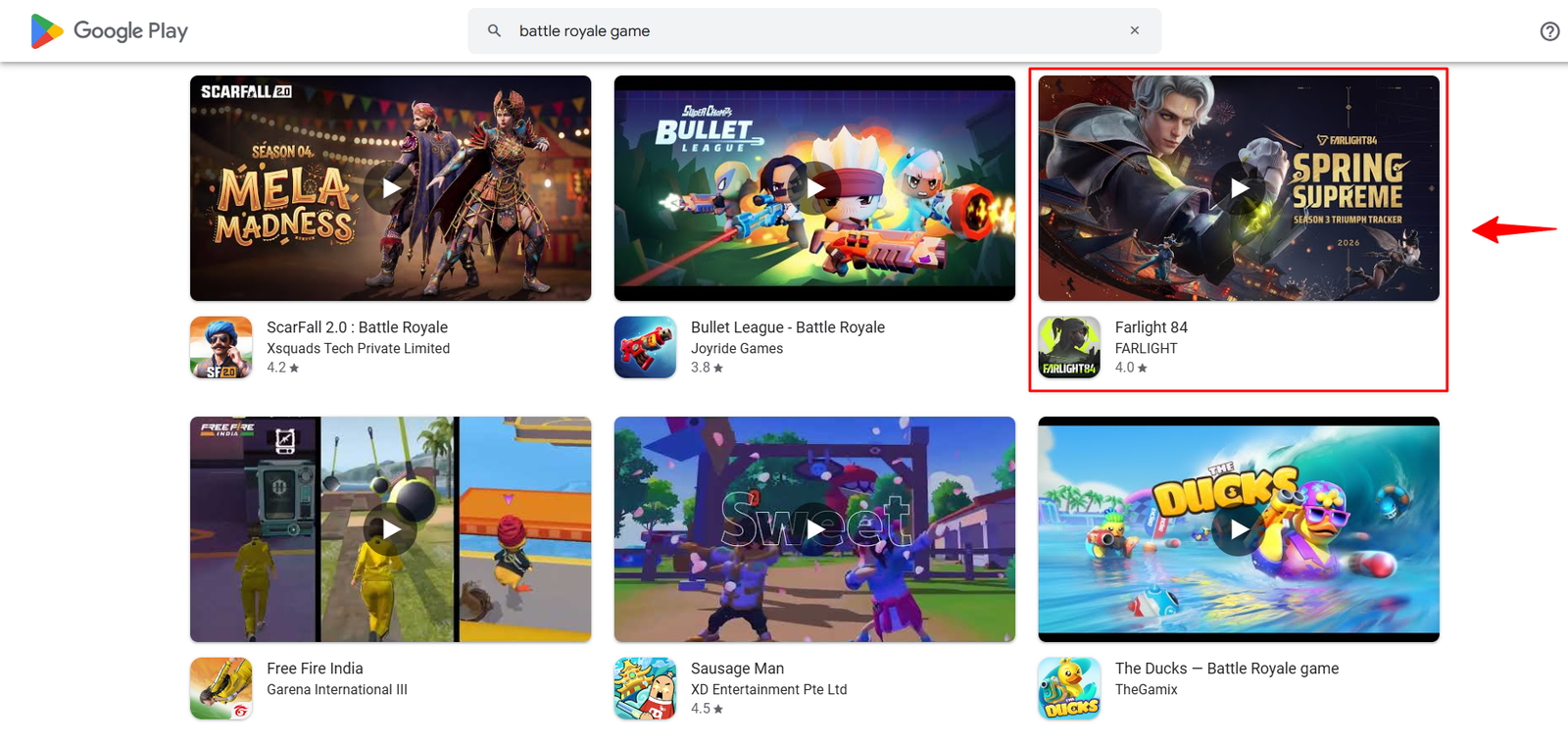
This highlights an important ASO principle. Games that clearly signal genre and gameplay expectations can earn visibility alongside larger competitors when their listings match what players are actively searching.
Here’s how to analyze competitors effectively:
- Study Ranking Patterns: Search your main genre keywords and track which games appear consistently across related searches.
- Break Down Their Metadata: Examine how they structure their titles, subtitles, and descriptions. Identify recurring keyword usage without copying messaging directly.
- Evaluate Creative Hooks: Look at screenshot headlines and preview videos to understand which gameplay moments they prioritize to attract installs.
- Mine Player Reviews: Reviews often expose unmet expectations, revealing audience segments competitors may not be serving effectively.
Competitor analysis is not about imitation. It helps you uncover positioning gaps and understand how to attract players who are already searching but not fully satisfied by existing options.
Step 5: Choose the Right App Store Before You Launch
Before optimizing your listing, you must decide where your game should compete first, because platform behavior directly influences visibility, conversion, and long-term growth.
Although Google Play and the Apple App Store dominate global distribution, user behavior differs significantly between them, which directly changes how app store optimization for games should be executed.
Key differences that impact ASO:
| Goal | Choose Google Play When… | Choose Apple App Store When… | Why This Matters for Game ASO |
| You want maximum installs & reach | Your goal is rapid global user acquisition | Reach is secondary to user value | Google Play drives ~72% of global downloads due to Android dominance |
| Your game uses Ads or F2P monetization | Ad revenue, rewarded ads, or mass retention models | Premium or IAP-driven monetization | Android audiences scale impressions faster, improving ad-based revenue loops |
| You are launching an Indie or New Studio Game | You need faster testing, iteration, and discovery | You already have strong polish and retention metrics | Google Play indexes updates faster, enabling quicker ASO experimentation |
| Your game depends on In-App Purchases | Monetization relies less on spending per user | High ARPU and paying players are critical | App Store generated $103.4B vs $46.7B on Play Store in 2024 |
| Target Market Geography | India, Southeast Asia, LATAM, emerging markets | US, Japan, Western Europe | Android dominates emerging markets with larger device penetration |
| Hyper-casual or Casual Games | High download velocity is required | Not ideal as a first launch platform | Casual games benefit from scale-driven installs |
| Mid-core / Hardcore Competitive Games | Early testing and audience building | Monetization scaling phase | Many studios soft-launch on Play Store, then scale revenue on iOS |
| Creative-Driven Conversion Strategy | Feature graphic attracts first clicks | Screenshot storytelling drives installs | Store layout changes what users evaluate first |
| You want Faster ASO Learning Cycles | Continuous iteration and keyword testing | Slower but more stable optimization cycles | Google Play allows faster metadata learning loops |
Google Play users often make faster install decisions influenced by feature graphics and search visibility, while App Store users typically evaluate screenshots and presentation more carefully before downloading.
Therefore, choosing the right platform early helps studios adapt keywords, creatives, and messaging according to platform behavior rather than applying the same strategy everywhere.
When platform selection aligns with audience behavior and monetization goals, ASO becomes more efficient, helping games gain traction faster and improve install conversion from the start.
Step 6: Focus on the Right Game Store Listing Elements
After choosing the right platform, success now depends on how effectively your store page communicates value, because players decide whether to install within just a few seconds.
Most users never read full descriptions. Instead, they scan visuals, titles, and early messaging cues to judge whether the game matches their expectations and playing intent.
The most important listing elements to optimize:
- Game Title & Subtitle: Your title should instantly communicate genre and gameplay style. Adding relevant keywords improves discovery while helping players understand the experience immediately.
- App Icon: Icons act as the first visual trigger. Strong icons usually feature recognizable characters, bold contrast, and emotional clarity that stand out among competing listings.
- Screenshots: Screenshots should tell a progression story instead of showing random UI. Use captions to highlight rewards, gameplay loops, or competitive moments players care about.
- Preview Video: A short gameplay-focused video increases conversion by showing real action. Players want to see movement, challenge, and outcomes rather than cinematic trailers.
- Description & Messaging: Descriptions support decision-making. Focus on gameplay loop, progression systems, and player benefits instead of technical explanations or feature lists.
When these elements work together, you can have a preset game’s app store optimized which will continue to add more and more organic growth.
Conclusion
App store optimization for games is no longer optional in today’s competitive mobile market, where visibility determines success and organic installs often decide whether a game scales sustainably.
From market research and audience understanding to keyword strategy and store listing optimization, each ASO step works together to position your game where the right players are already searching.
Gaming studios that treat their store page as a growth channel rather than a publishing requirement consistently achieve stronger discovery, better conversion, and more efficient long-term player acquisition.
Ready to turn your game into a consistent organic growth engine? Partner with Bizzware’s game marketing experts and let us build, optimize, and scale your ASO strategy to drive real installs and measurable results.