

How much does it cost to acquire a user in mobile games today?
The answer is not as straightforward as most expect.
Mobile game user acquisition cost has increased significantly due to rising competition, ad saturation, and privacy changes affecting targeting efficiency across platforms.
According to AppsFlyer, average mobile gaming CPI ranges between $1.5 to $4+, depending on region and genre.
Therefore, in this blog, we’ll break down real mobile gaming CPI benchmarks and how to estimate customer acquisition costs accurately before scaling your mobile game marketing efforts.
Let’s find out!
What is Mobile Game User Acquisition Cost?
Mobile game user acquisition cost is the total amount spent on paid campaigns to acquire one new player for your game. In most cases, marketers first measure this through CPI, which simply means the average cost paid for one install.
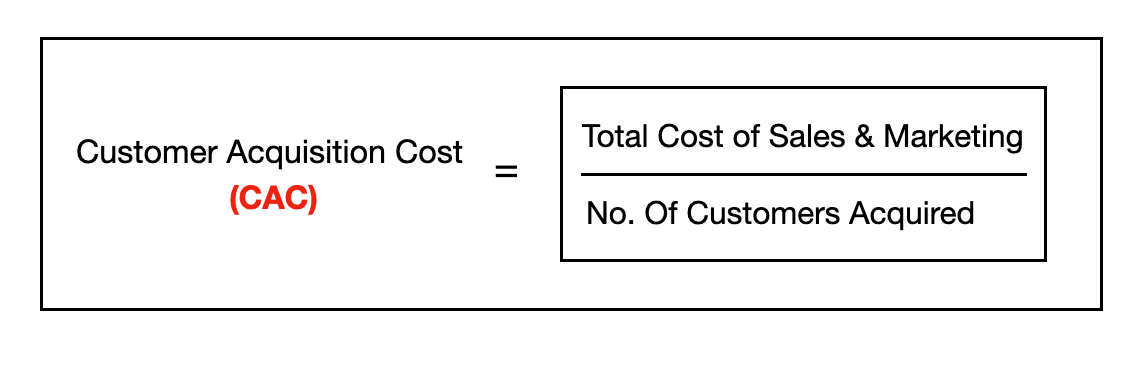
However, the real acquisition cost goes beyond installs because not every downloaded user becomes an active or paying player.
That is why gaming studios also track CAC, which measures how much it costs to acquire one paying user.
Quick metric breakdown:
| Metric | What it Tracks | Why It Matters |
| CPI | Cost per install | Measures campaign acquisition efficiency |
| CAC | Cost per paying user | Shows true business acquisition cost |
| ROAS | Revenue from acquired users | Validates profitability and scale decisions |
In simple terms, mobile game user acquisition cost answers one core question “how much budget is needed to bring valuable players into the game?”.
For gaming studios, understanding the importance of mobile game user acquisition is the basic foundation of having profitable growth, scaling decisions, and realistic UA budget planning.
How Much Does It Cost to Acquire a User in Mobile Games?
| The direct answer: mobile game user acquisition cost typically ranges between $1 to $5+, but actual costs vary based on multiple factors. |
On a global level, Android installs usually fall between $1.20 to $4.00, while iOS can reach $3.60+ due to higher monetization potential.
| Platform | Average CPI Range | Insight |
| Android | $1.20 – $4.00 | Lower cost, volume-driven acquisition |
| iOS | $3.50 – $5.00+ | Higher cost, higher-value users |
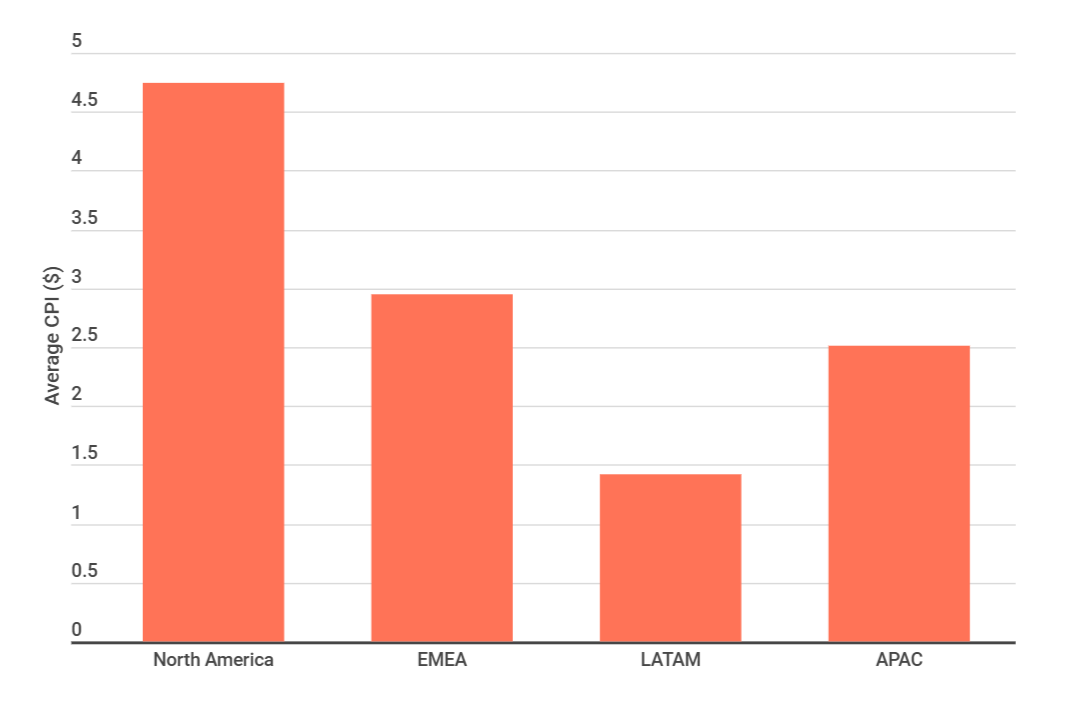
Region plays a major role because acquisition costs increase significantly in competitive markets with higher advertiser demand and stronger purchasing power.
| Region | Typical CPI Range | Insight |
| North America | $2.5 – $5.00+ | Highest competition and ad spend concentration |
| EMEA | $2.0 – $4.00 | Balanced cost and scale |
| APAC | $1.5 – $3.00 | Growth-driven, cost-efficient markets |
| LATAM | $0.50 – $2.00 | Lowest acquisition costs globally |
Genre also impacts costs because deeper gameplay requires higher-intent users, increasing bidding competition and overall acquisition expenses.
| Genre | iOS CPI | Android CPI |
| Casual | ~$2.5 | ~$1.5 |
| Mid-core | ~$4.5 | ~$3.25 |
| Hardcore | ~$6.0 | ~$4.5 |
Another key factor is market competition, as global gaming user acquisition spend crossed $25 billion in 2025, increasing bidding pressure.
This means mobile game user acquisition cost is not fixed, and changes constantly based on competition, targeting strategy, and campaign performance.
The most accurate way to view cost is not just CPI, but how much it costs to acquire retained and paying users.
For gaming studios, a higher CPI is acceptable if user retention, engagement, and monetization justify the acquisition investment.
Mobile Game CPI Benchmarks by Genre
Genre-level benchmarks give the clearest answer because mobile game user acquisition cost changes dramatically based on player intent and monetization depth.
Some benchmark ranges across major genres show how audience quality directly impacts CPI expectations.
| Genre | Android CPI | iOS CPI | Benchmark Insight |
| Hyper-casual | $0.20 – $0.60 | $0.45 – $1.20 | Fast installs, ad-led monetization |
| Hybrid-casual | $0.10 – $0.30 | $0.45 – $0.90 | Better retention with low CPI |
| Puzzle / Casual | $1.20 – $2.00 | $2.50 – $3.50 | Broad audience, scalable ROAS |
| Simulation / Sports | $1.00 – $2.50 | $2.50 – $4.50 | Strong repeat engagement |
| Action / Shooter / MOBA | $1.50 – $3.50 | $3.50 – $6.00 | Competitive high-intent players |
| Strategy / Mid-core | $3.00 – $4.50 | $4.50 – $6.50 | Higher payer depth and LTV |
| RPG | $3.50 – $5.00 | $5.50 – $7.00+ | High-spend loyal segments |
| Casino / Slots | $4.00 – $6.50 | $6.00 – $10.00+ | Premium whale acquisition economics |
Hyper-casual and hybrid-casual remain the most cost-efficient because of low-friction installs and ad monetization support aggressive scale.
Puzzle, simulation, and sports games move higher because longer sessions and better retention justify stronger acquisition bids.
Action, shooter, and MOBA genres cost more because creative quality must pre-qualify skill-driven and socially competitive audiences.
RPG, strategy, and casino games command the highest CPI because even a small cohort of retained payers can drive outsized ROAS.
A major 2026 shift is hybrid-casual momentum, where slightly higher CPI now delivers stronger D30 retention and IAP conversion.
For gaming studios, the best benchmark is genre CPI mapped against retention, payer conversion, and LTV, not installs alone.
Factors That Affect Mobile Game User Acquisition Cost
Mobile game user acquisition cost rarely stays fixed because platform economics, audience intent, and market competition change campaign efficiency daily.
The same game can see completely different CPI outcomes across regions, creatives, and retention performance benchmarks.
Here are the biggest factors that directly influence acquisition costs:
- Geography and Market Competition
Tier 1 regions like the US, UK, and Japan usually carry the highest CPI because more advertisers compete for the same audience.
Emerging markets such as India, LATAM, and SEA stay cheaper, but lower ARPU can change profitability thresholds.
- Platform: iOS vs Android
iOS acquisition usually costs more because these users often monetize better through in-app purchases and subscriptions.
Android generally offers lower CPI, faster learning cycles, and stronger scale opportunities for broader audience targeting.
- Creative Quality and Hook Rate
The first three seconds of your ad directly affect CTR, CVR, and overall acquisition efficiency.
Playable ads, UGC-style creatives, and stronger hooks usually reduce wasted impressions and improve install quality.
- Genre and User Intent
Hyper-casual users install quickly, while RPG, strategy, and casino players need stronger pre-install qualification.
Higher-intent users cost more, but they often deliver stronger retention and monetization outcomes.
- Retention and In-Game Experience
Ad platforms reward campaigns that drive Day 1 and Day 7 retention because these users create stronger revenue signals.
Poor onboarding, weak FTUE, and early churn increase effective acquisition costs even when CPI looks healthy.
- App Store Conversion Rate
A weak icon, unclear screenshots, or poor ratings can silently raise effective acquisition cost after the ad click. Improving store page CVR often reduces blended CPI without changing campaign bids.
- Seasonality and Auction Pressure
Q4, holiday sales, major launches, and esports events usually increase competition and raise CPI benchmarks significantly.
For gaming studios, the lowest acquisition costs usually come from fixing creatives, retention, and store conversion before scaling spend.
Also Check: 60+ Mobile Game Statistics Shaping the Industry in 2026
Why Your CAC Might Be Higher Than Industry Average?
If your mobile game user acquisition cost is above benchmark, the issue usually starts after the install, not before it.
High CAC often signals weak user quality loops, where paid traffic enters but fails to retain, convert, or monetize efficiently.
Below are the most common reasons gaming studios pay above-average CAC:
- Weak Creative-to-Store Message Match
When ad creatives promise one experience but the store page shows another, install conversion and early trust drop sharply.
This mismatch increases wasted clicks, lowers CVR, and silently pushes effective acquisition cost higher across every channel.
- Poor FTUE and Early Churn
Many campaigns look healthy on CPI but fail because users churn during the first session or tutorial.
If Day-1 retention drops below genre benchmarks, ad platforms receive weak quality feedback and raise bid costs.
- Scaling Before Monetization Stability
Gaming studios often increase spend before payer conversion, D7 retention, or ad ARPDAU stabilizes.
This creates a false scale, where higher spend amplifies unprofitable cohorts instead of validated acquisition loops.
- Overdependence on One Paid Channel
Relying only on Meta, AppLovin, or Google reduces pricing flexibility when auctions become crowded.
Diversified channel mixes usually lower blended CAC by improving audience reach and creative longevity.
- Creative Fatigue
Running the same winning creatives for too long causes CTR decline, CPM inflation, and weaker install quality.
In 2026, fast creative refresh cycles are directly linked to lower CAC in gaming campaigns.
- Targeting Too Broad or Too Narrow
Broad targeting may reduce user quality, while narrow targeting increases auction competition and CPM pressure. The best-performing gaming studios continuously rebalance targeting against LTV cohorts, not vanity CPI benchmarks.
For gaming studios, focusing on onboarding, creative refresh, channel mix, and payer conversion usually reduces CAC faster than bid changes alone.
How to Estimate Your Mobile Game User Acquisition Cost
Estimating mobile game user acquisition cost starts with a simple formula, but profitable forecasting needs more than CPI alone.
Start with the base calculation:
| CAC = Total UA Spend ÷ New Users Acquired |
For example, if a gaming studio spends $5,000 on paid campaigns and acquires 1,000 new users, CAC becomes $5.
However, install-based CAC is only the first layer because real profitability depends on retained and paying users.
A better estimation model for gaming studios includes four validation checkpoints before scaling the budget.
1. Start with CPI Test Budget
Run a controlled test budget across Meta, Google, TikTok, or rewarded networks to establish your real baseline CPI.
This gives you platform-specific acquisition ranges before larger scaling distorts cost efficiency.
2. Add Store Conversion Rate
Not every click becomes an install, so your store page CVR directly changes effective acquisition cost.
| Effective CPI = Ad CPC ÷ Store CVR |
Higher screenshot quality, ratings, and gameplay previews can materially improve this benchmark.
3. Layer in Retention and Payer Conversion
The most realistic CAC estimate includes how many acquired users actually retain and convert into payers.
Example forecast model:
| Stage | Benchmark |
| Install CPI | $3.00 |
| D7 Retention | 20% |
| Payer Conversion | 3% |
| Estimated CAC per Payer | $50.00 |
This calculation helps gaming studios avoid overvaluing cheap installs that never monetize.
4. Validate Against LTV
The final step is comparing projected CAC against lifetime value by genre and platform.
A healthy target for most gaming studios is an LTV:CAC ratio of at least 3:1, especially for casual and mid-core games.
The most accurate forecasting approach is to test CPI first, then map retention, payer conversion, and LTV before scaling.
Also Check: 13 Top Mobile Game KPIs That Decide Your Game’s Worth
How to Reduce Mobile Game User Acquisition Cost
Reducing mobile game user acquisition cost is less about lowering bids and more about improving conversion quality across the funnel.
The biggest CPI wins usually come from fixing pre-install messaging, post-install retention, and store conversion together.
Below are the most effective ways to reduce mobile game user acquisition costs in 2026:
1. Improve Creative Testing Velocity
Creative is now the biggest performance lever because targeting precision is weaker after privacy-led attribution changes.
High-performing gaming studios test new hooks, UGC angles, gameplay loops, and playable concepts every week, not monthly.
This directly improves CTR, lowers CPM waste, and reduces CPI inflation from creative fatigue.
2. Align Ad Message with Store Page
One of the fastest ways to reduce CAC is through tighter message continuity between ad, app store, and onboarding.
When the promise in the ad matches screenshots, reviews, and FTUE value, install conversion rises significantly.
This lowers effective CPI without changing campaign bids.
3. Optimize Day 1 and Day 7 Retention
Platforms increasingly reward campaigns that bring retained players, not just cheap installs.
Even a small D1 retention lift can improve bid efficiency and lower blended acquisition costs over time.
Key retention fixes:
- Faster FTUE completion
- Reward-first onboarding
- Clear progression loops
- Early social hooks
- Better push re-engagement
4. Expand Into Lower-Cost Test Geos
Before scaling into Tier 1 geographies, gaming studios often validate economics in India, LATAM, MENA, and Southeast Asia.
This helps improve creative learning and payer models at significantly lower CPI benchmarks.
5. Use LTV-Based Automated Bidding
Modern campaign optimization should target payer events, ROAS, or D7 retention proxies instead of install-only bidding.
This reduces wasted acquisition on low-quality cohorts and improves profitable scale.
6. Improve ASO Conversion Rate
Better icons, stronger first screenshots, ratings, and keyword alignment reduce paid acquisition leakage after the click.
Doing ASO (App Store Optimization) for games can often create the cheapest CPI reduction opportunity because no extra media spend is required.
The highest-performing gaming studios reduce CAC by improving systems, not just campaigns.
When creatives, ASO, onboarding, and retention improve together, mobile game user acquisition cost drops while ROAS scales sustainably.
What is a Good User Acquisition Cost for Mobile Games?
A good mobile game user acquisition cost is any cost your game can recover profitably through retention, engagement, and lifetime value.
The strongest benchmark used by gaming studios is whether acquired player LTV stays meaningfully higher than acquisition cost.
The most widely accepted benchmark is this:
| Good CAC Benchmark = LTV : CAC ratio of 3:1 or Better |
This means that for every $1 spent on user acquisition, it should ideally generate at least $3 in player lifetime revenue.
Quick benchmark guide:
| LTV:CAC Ratio | Meaning |
| Below 1:1 | Losing money on every acquired user |
| 2:1 | Sustainable but optimization needed |
| 3:1 | Healthy and scalable benchmark |
| 4:1 to 5:1+ | Highly profitable, room to scale harder |
However, the “good” cost changes significantly by genre because payer behavior and retention windows differ.
For example, hyper-casual games may work at lower recovery windows because ad monetization starts immediately, while RPG and casino games can support much higher CAC.
Another practical benchmark is payback speed, where gaming studios aim to recover CAC by D30, D60, or D90, depending on genre.
| Genre | Healthy CAC Recovery Timeframe |
| Hyper-casual | D7 to D14 |
| Casual | D30 |
| Mid-core / Strategy | D60 |
| RPG / Casino | D90+ |
This is why a $5 CPI can be excellent for a strategy game but terrible for a hyper-casual game.
Therefore, the best user acquisition cost is the one that compounds profitable growth, not just cheaper installs.
Also Check: 9 Must-Know Trends in Gaming Industry Shaping 2026
Conclusion
Mobile game user acquisition cost is rising as competition increases, with global gaming UA spend reaching nearly $25 billion in 2025. This makes understanding CPI, CAC, retention, and LTV essential for building profitable acquisition systems instead of chasing low-cost installs.
Gaming studios that align creatives, retention, and monetization consistently outperform competitors, even when acquisition costs appear higher on the surface.
If you want to scale installs profitably while controlling acquisition costs, focus on systems that convert users into long-term revenue drivers.
Need help reducing your mobile game user acquisition cost and scaling profitably? We’re Bizzware, a game marketing agency that helps you grow faster. Contact us today!