
When was the last time you checked your game analytics?
It’s important to look beyond just installs and revenue and focus on precisely what players are doing inside your game.
On average, over 95% of mobile game users stop playing within 30 days, making retention the biggest growth bottleneck for gaming studios today.
This is where game analytics tools become essential. They enable you to track player behavior, identify where players drop off, and understand what drives engagement.
In this blog, we’ll break down the best game analytics tools, highlight key features to consider, and explain how to choose the right analytics platform for your game.
Key Features to Look for in Game Analytics Tools
Selecting the right analytics features is less about collecting data and more about understanding what actually influences player behavior and game growth.
Most games don’t struggle because of lack of data, but because they track everything without focusing on what matters.
So instead of listing generic capabilities, here are the most important things your game analytics tool should help you uncover:
- Retention Signals First: You should immediately know when players stop returning and at what exact stage they drop off. This helps you fix early-game experience issues before scaling acquisition.
- Player Flow Understanding: You should be able to trace how players naturally move through levels, menus, and core gameplay loops. Basically, this is called player journey, which shows whether your game design is intuitive or creates friction.
- Revenue Behavior Clarity: You should understand what drives spending decisions inside your game, not just total revenue numbers. This helps refine monetization without disrupting gameplay balance.
- Meaningful Player Grouping: You should be able to separate players based on actions and engagement patterns, not just basic attributes. Later, it’ll allow you to adjust gameplay for different types of users effectively.
- Controlled Experimentation: You should be able to test gameplay changes, UI variations, or reward systems before rolling them out widely. This reduces risk and ensures improvements are backed by actual player response.
These priorities matter because they shift analytics from reporting numbers to improving decisions. Without focusing on these, even advanced game analytics tools become just dashboards instead of growth systems.
10 Best Game Analytics Tools for Developers & Marketers
Before you dive in, here are the best game analytics tools you can consider to start tracking your game performance and player behavior effectively:
| Top Game Analytics Tools | Key Features | Pricing | Best For |
| GameAnalytics | Player behavior tracking, retention analytics, funnels & cohorts, live events, custom events, monetization metrics | Free plan; paid plans from approx. $29/month; advanced modules priced separately | Mobile, PC, and cross-platform studios |
| Firebase Analytics | Event-based tracking, audience segmentation, funnel analysis, retention reporting, Firebase ecosystem integration | Free under Spark and Blaze; other Firebase services are usage-based | Mobile and cross-platform games |
| ByteBrew | Real-time game analytics, custom event tracking, live operations control, ad & monetization tracking, cross-promotion tools | Free-to-start; advanced features via custom pricing | Mobile game studios |
| PlayFab Analytics | Game data streaming, player progression tracking, LiveOps, economy insights, community & multiplayer data | Usage-based pricing; basic usage included at no upfront cost | Scalable live-service and cross-platform games |
| Amplitude | Product analytics, behavioral cohorts, session replay, feature experimentation, AI-powered insights | Free Starter plan; paid plans from $49/month | Growth and product teams in gaming |
| Mixpanel | Product analytics, funnel analysis, session replay & heatmaps, experimentation & feature flags, AI insights & metric trees | Free plan up to 1M monthly events; paid Growth plans usage-based; Enterprise custom | Teams needing behavioral analysis and experimentation |
| AppsFlyer | Mobile attribution, deep linking, fraud protection, audience cohorts, AI & agentic automation | Zero: free; Growth: pay-as-you-go; Enterprise: custom pricing | Marketing teams focused on ROAS and attribution |
| Adjust | Attribution & measurement, deep linking, SKAN & iOS measurement, fraud prevention, analytics & reporting, growth automation | Base free; Core; Enterprise custom pricing | App teams scaling user acquisition |
| Kochava | Omnichannel attribution, real-time analytics, deep linking & SmartLinks, fraud prevention, IdentityLink, marketing mix modeling | Free App Analytics at $0/month; Foundation starts at $500/month; Enterprise starts at $2,000/month | Advertisers and publishers needing omnichannel measurement |
| CleverTap | Behavioral analytics, unified user profiles, segmentation, campaign orchestration, experimentation & optimization | Essentials starts at $75/month up to 5,000 MAU; higher tiers available | Engagement and retention-focused game teams |
Now, let’s go through each game analytics platform one by one and understand which tool fits your game requirements best.
1. GameAnalytics
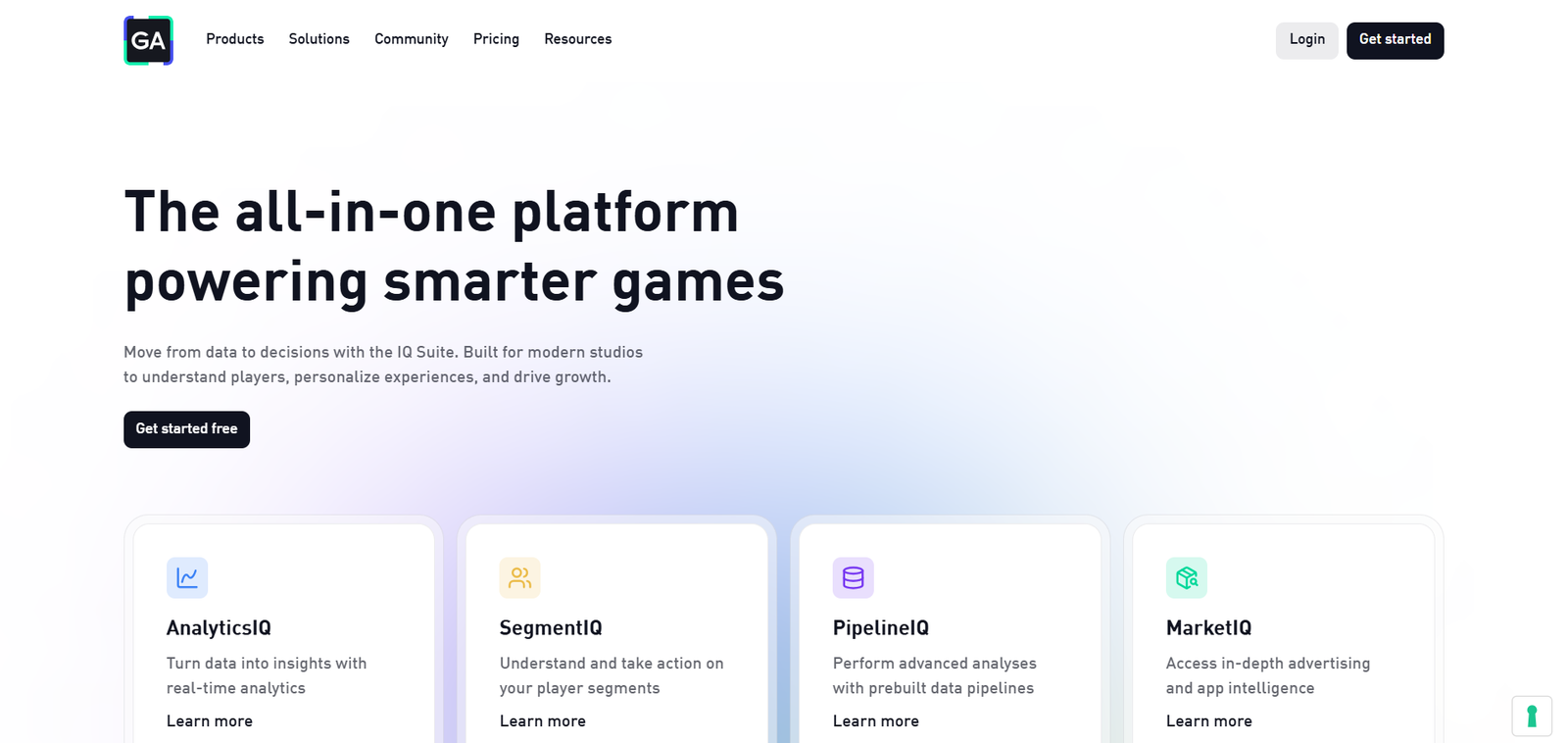
GameAnalytics is a full-stack gaming analytics platform built to help studios move from raw gameplay data to structured, decision-ready insights. It focuses on understanding player behavior, optimizing engagement, and improving monetization through a unified analytics ecosystem. The platform is designed for mobile, PC, and cross-platform games, supporting both indie developers and large-scale studios.
It combines analytics, segmentation, pipelines, and market intelligence into one system so teams can understand players and act on data faster without complex infrastructure.
Key Features of GameAnalytics
- Player Behavior Tracking: Provides real-time tracking of in-game events, helping studios understand exactly how players interact with gameplay systems and progression paths.
- Retention Analytics: Tracks player return behavior across key lifecycle stages like Day 1, Day 7, and Day 30 to identify retention strength and drop-off patterns.
- Funnels & Cohorts: Helps analyze player progression through structured funnels and cohort groups to understand where users convert or exit gameplay loops.
- Live Events & Real-Time Insights: Monitors live gameplay data as it happens, enabling quick adjustments to gameplay balance, engagement systems, or live operations.
- Custom Events & Segmentation: Allows studios to define custom in-game events and segment players based on behavior for more precise analysis and targeting.
- Monetization & Performance Metrics: Tracks revenue signals such as in-app purchases, ad impressions, and player value metrics like ARPU and lifetime value.
Pricing
GameAnalytics offers a free plan that includes core analytics capabilities with no MAU limits. Paid plans start from approximately $29/month for deeper analytics and scaling features, while advanced modules like SegmentIQ, PipelineIQ, and MarketIQ are priced separately based on usage and requirements.
Also Read: 5 Effective Ways to Promote a Mobile Game in 2026
2. Firebase Analytics

Firebase Analytics is a Google-backed analytics platform designed to help game developers track player behavior, engagement, and in-game actions at scale. It is part of the Firebase ecosystem, which connects analytics with tools like testing, monitoring, and app performance optimization. For game studios, it provides structured insights into how players interact with games without requiring complex backend systems.
It is widely used in mobile and cross-platform games because it integrates directly with Firebase tools, enabling faster experimentation, tracking, and optimization.
Key Features of Firebase Analytics
- Event-Based Tracking: Captures every in-game interaction like level progress, clicks, and gameplay actions to understand player behavior patterns clearly.
- Audience Insights & Segmentation: Groups players based on behavior and engagement levels to help studios design more targeted gameplay experiences.
- Funnel Analysis: Tracks player movement across key game stages to identify where users drop off during onboarding or progression flows.
- Retention Reporting: Measures how often players return over time, helping evaluate long-term engagement and player loyalty across cohorts.
- Firebase Ecosystem Integration: Connects seamlessly with Remote Config, A/B Testing, and Crashlytics to optimize and test game performance continuously.
Pricing
Firebase Analytics is free under both Spark and Blaze plans, offering unlimited analytics tracking at no direct cost. Other Firebase services follow usage-based pricing depending on scale and infrastructure usage.
3. ByteBrew
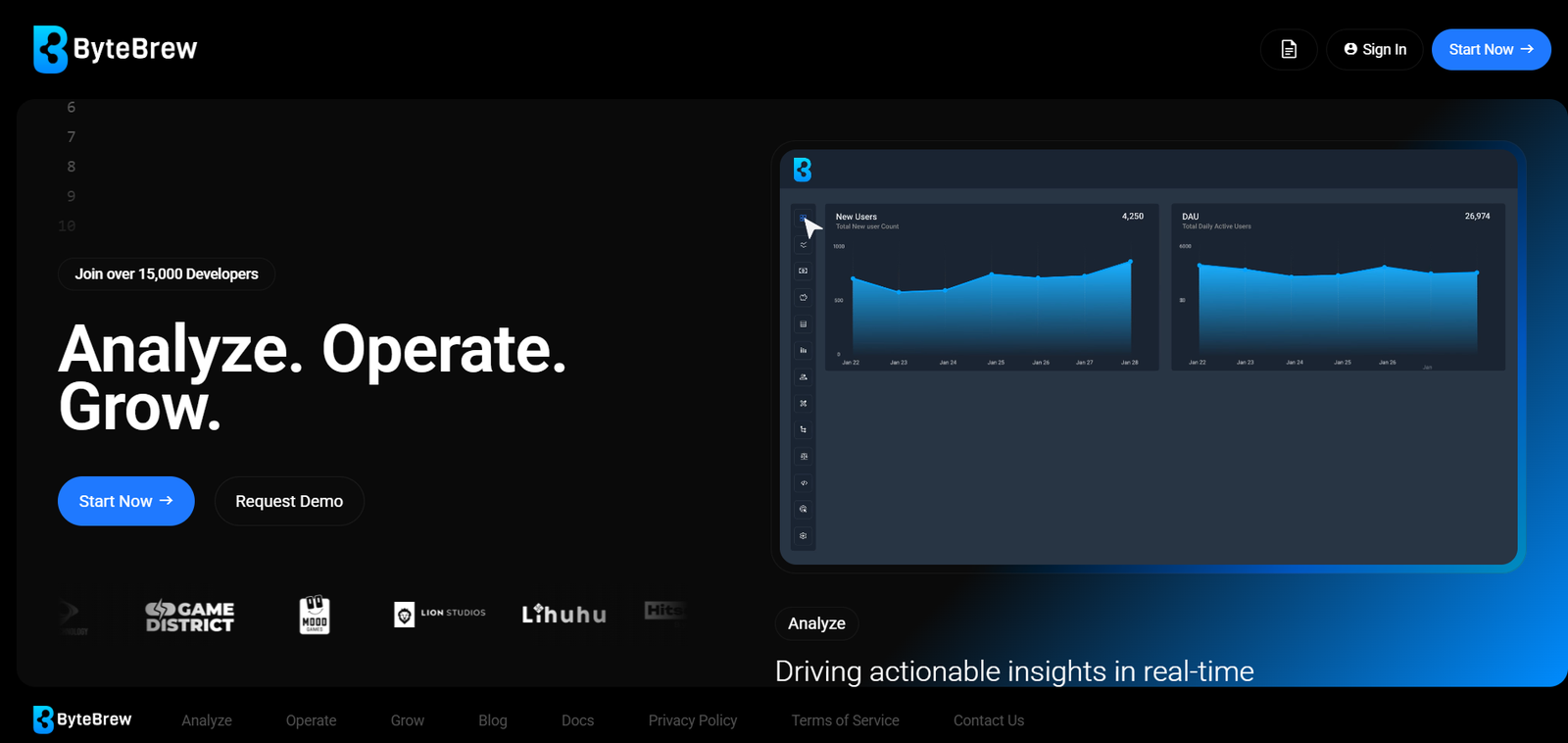
ByteBrew is a mobile game analytics platform built to help developers analyze, operate, and grow their games using real-time player data. It focuses on providing a unified system for analytics, live operations, monetization tracking, and user engagement optimization. The platform is designed specifically for mobile game studios that want full control over performance insights without relying on multiple disconnected tools.
Key Features of ByteBrew
- Real-Time Game Analytics: Tracks player actions instantly to help studios understand engagement patterns, retention behavior, and gameplay performance as it happens.
- Custom Event Tracking: Allows developers to define and monitor in-game events like level progress, purchases, and interactions for deeper behavioral insights.
- Live Operations Control: Enables studios to push updates, adjust gameplay variables, and measure impact directly without requiring full app updates.
- Ad & Monetization Tracking: Helps monitor ad performance, revenue flow, and purchase behavior to improve monetization efficiency across players.
- Cross Promotion & Growth Tools: Supports internal game promotion strategies to increase installs, engagement, and retention across a studio’s game portfolio.
Pricing
ByteBrew offers a free-to-start model for developers, allowing access to core analytics and growth tools without upfront cost. Advanced features and enterprise-level capabilities are available through custom pricing based on scale and studio requirements.
Also Check: How to Leverage Social Media Marketing for Games? [7+ Effective Tactics]
4. PlayFab Analytics

PlayFab Analytics is a backend-driven game analytics and live operations platform by Microsoft designed for scalable, cross-platform games. It helps studios track player activity, manage game economies, and analyze engagement across the entire player lifecycle. It is tightly integrated with PlayFab’s broader ecosystem, enabling developers to combine analytics with multiplayer services, progression systems, and live game management tools.
Key Features of PlayFab Analytics
- Game Data Streaming: Tracks real-time player activity, retention patterns, and revenue behavior to help studios understand live game performance continuously.
- Player Progression Tracking: Monitors player stats, profiles, and cross-platform progression to ensure seamless gameplay across devices and ecosystems.
- LiveOps & Remote Configuration: Allows developers to adjust gameplay elements, run experiments, and segment players without requiring full game updates.
- Economy & Monetization Insights: Provides visibility into virtual economies, in-game purchases, and revenue systems to optimize game profitability.
- Community & Multiplayer Data: Connects social systems like leaderboards, chat, and multiplayer interactions to analyze engagement at a community level.
Pricing
PlayFab follows a usage-based pricing model under Microsoft Azure, where many core features are included at no upfront cost for basic usage. Advanced services like multiplayer, data streaming, and economy tools scale based on usage and infrastructure consumption.
5. Amplitude
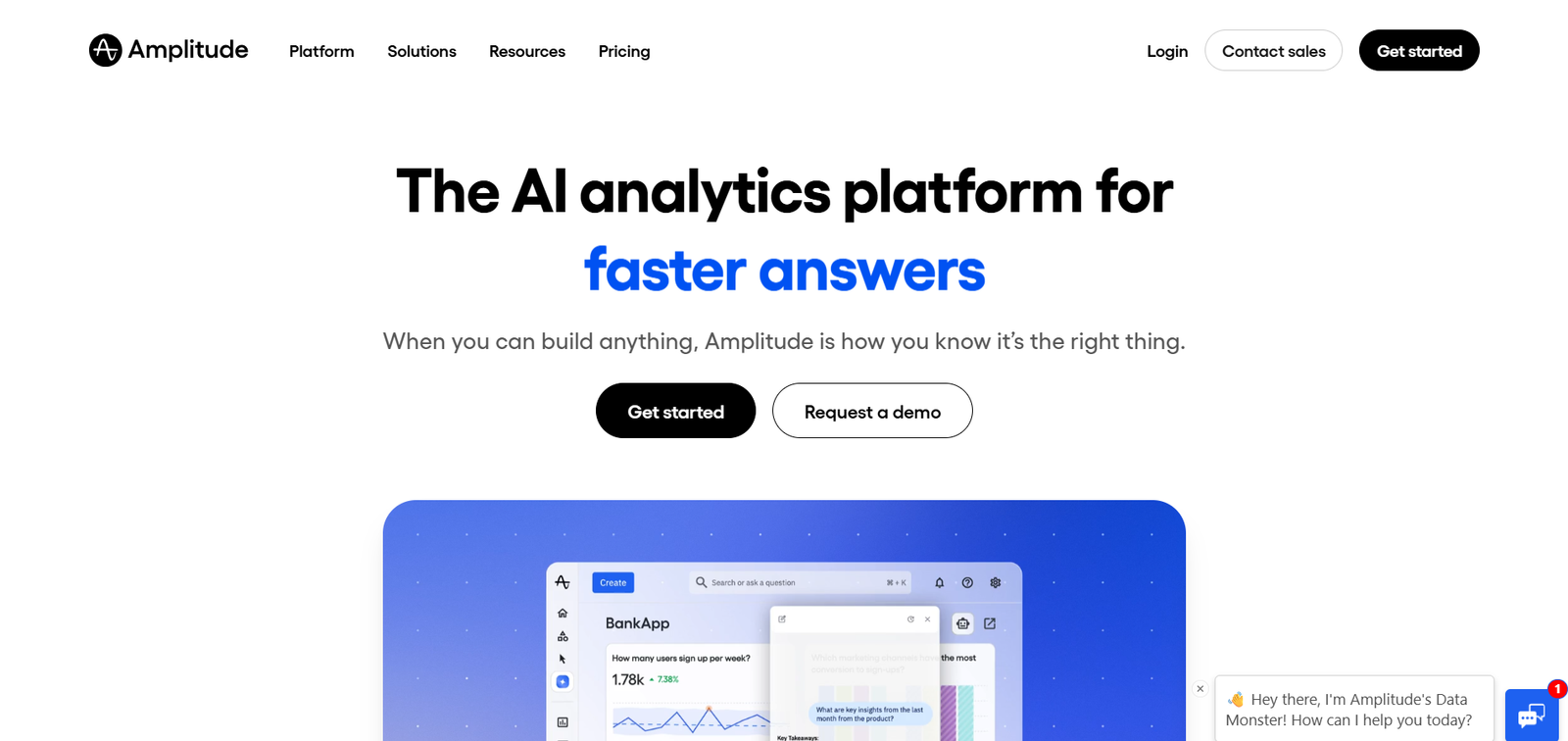
Amplitude is an AI-powered product and game analytics platform designed to help teams understand player behavior, optimize engagement, and improve retention through deep behavioral insights. It focuses on mapping the entire user journey, from acquisition to monetization, using real-time analytics, experimentation tools, and AI-driven insights. For game studios, it works as a decision-making layer that connects player data with actionable product strategies.
It is commonly adopted by growth and product teams in gaming because it combines behavioral analytics, experimentation, and AI-based decision support in one system.
Key Features of Amplitude
- Product Analytics: Tracks full player journeys across sessions, helping studios understand how users interact with game features and progression paths.
- Behavioral Cohorts: Groups players based on in-game behavior to identify high-value users and analyze retention patterns across segments.
- Session Replay: Visualizes actual player sessions to detect friction points, gameplay issues, and engagement drop-offs.
- Feature Experimentation: Enables A/B testing of game mechanics, UI changes, and features to validate impact before full rollout.
- AI-Powered Insights: Uses AI agents and predictive analysis to surface growth opportunities, engagement risks, and optimization actions.
Pricing
Amplitude offers a free Starter plan with core analytics, session replay, and experimentation tools. Paid plans begin at $49 per month and scale based on usage, team size, and advanced analytics requirements.
6. Mixpanel
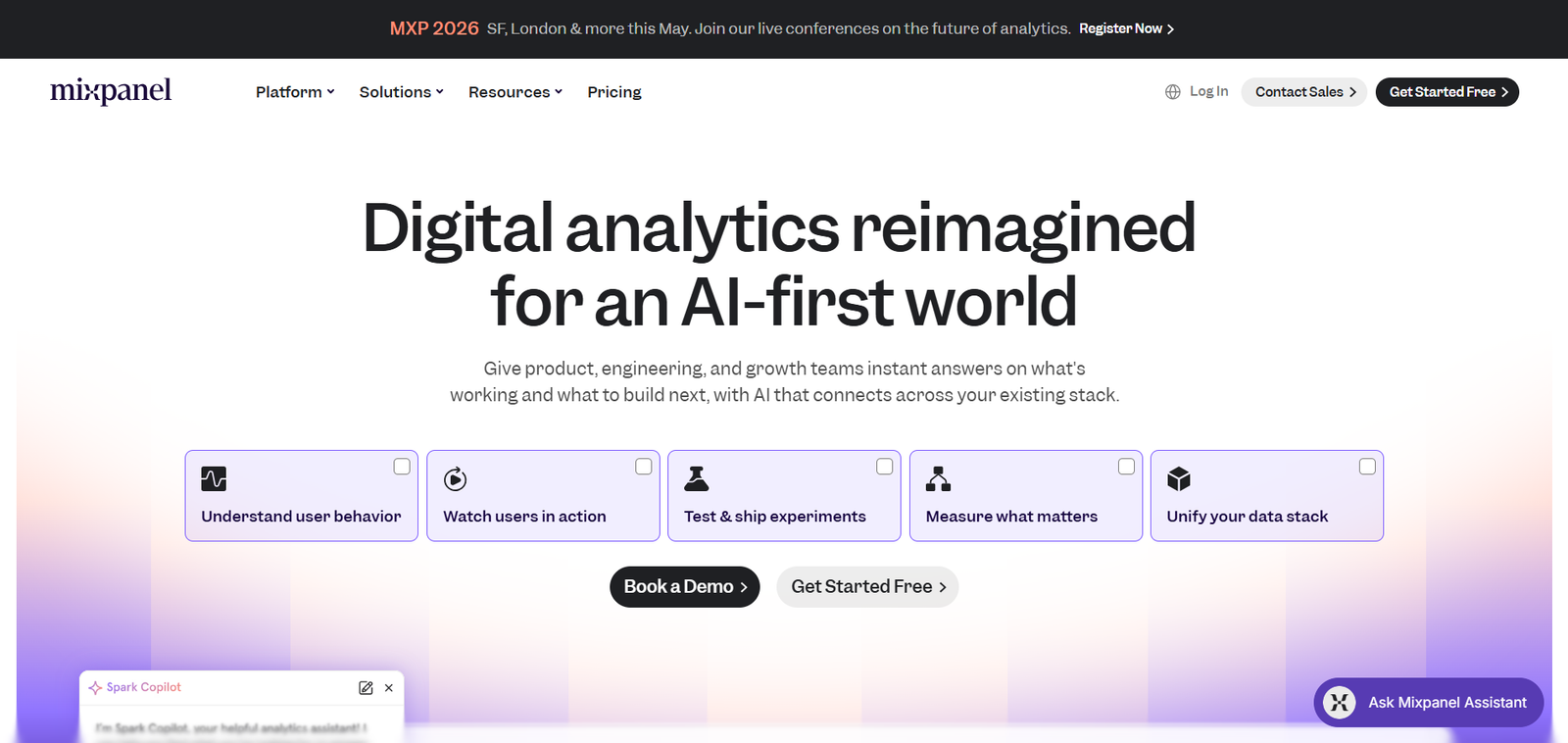
Mixpanel is an AI-powered product analytics platform designed to help teams understand user behavior, track engagement, and optimize product decisions through real-time data. It focuses on event-based tracking, funnel analysis, and behavioral insights that show exactly how users interact with digital products. For game studios, it helps identify what drives retention, conversions, and long-term player engagement without relying on static dashboards.
Key Features of Mixpanel
- Product Analytics: Tracks detailed user actions across the full journey, helping studios understand gameplay behavior, drop-offs, and engagement trends.
- Funnel Analysis: Visualizes step-by-step player progression to identify where users exit during onboarding, gameplay, or monetization flows.
- Session Replay & Heatmaps: Shows real user sessions and interaction patterns to uncover friction points and improve gameplay experience.
- Experimentation & Feature Flags: Enables A/B testing of game features, UI changes, and monetization strategies with real-time performance measurement.
- AI Insights & Metric Trees: Uses AI and structured metric mapping to surface growth drivers, anomalies, and key performance relationships.
Pricing
Mixpanel offers a free plan with up to 1M monthly events and core analytics features. Paid Growth plans start at usage-based pricing (from event volume), while Enterprise plans include advanced governance, scaling, and security features.
You Might Like: 7 Definitive Ways to Market a Video Game Successfully in 2026
7. AppsFlyer
AppsFlyer helps game studios connect attribution, engagement, revenue, and fraud data in one place, so marketing teams can see which channels bring quality players, which journeys convert, and which campaigns deserve more budget across mobile, web, CTV, PC, and console.
For game teams, it becomes a measurement layer that improves ROAS, reduces signal loss, and strengthens player journeys.
Key Features of AppsFlyer
- Mobile Attribution & Measurement: Connects installs, revenue, and engagement across mobile, web, CTV, and console to show which channels drive profitable players.
- Deep Linking & Journey Routing: Routes players from email, QR, social, or web straight into relevant in-game experiences to convert faster and consistently.
- Fraud Protection: Blocks suspicious installs and fake activity so marketing decisions rely on cleaner attribution data at scale every day.
- Audience Segmentation & Cohorts: Builds audience segments from behavior and campaign data, helping studios retarget players with more relevant offers and messages.
- AI & Agentic Automation: Uses AI agents and MCP to surface insights, automate analysis, and speed up response inside existing workflows daily.
Pricing
- Zero: Free plan for owned-media use, with 12,000 free conversions in the first year and no support for paid activities.
- Growth: Pay-as-you-go plan with the first 1M conversions free, then $0.07 per conversion after the welcome package.
- Enterprise: Custom pricing for larger teams that need advanced measurement, fraud protection, and tailored support.
8. Adjust
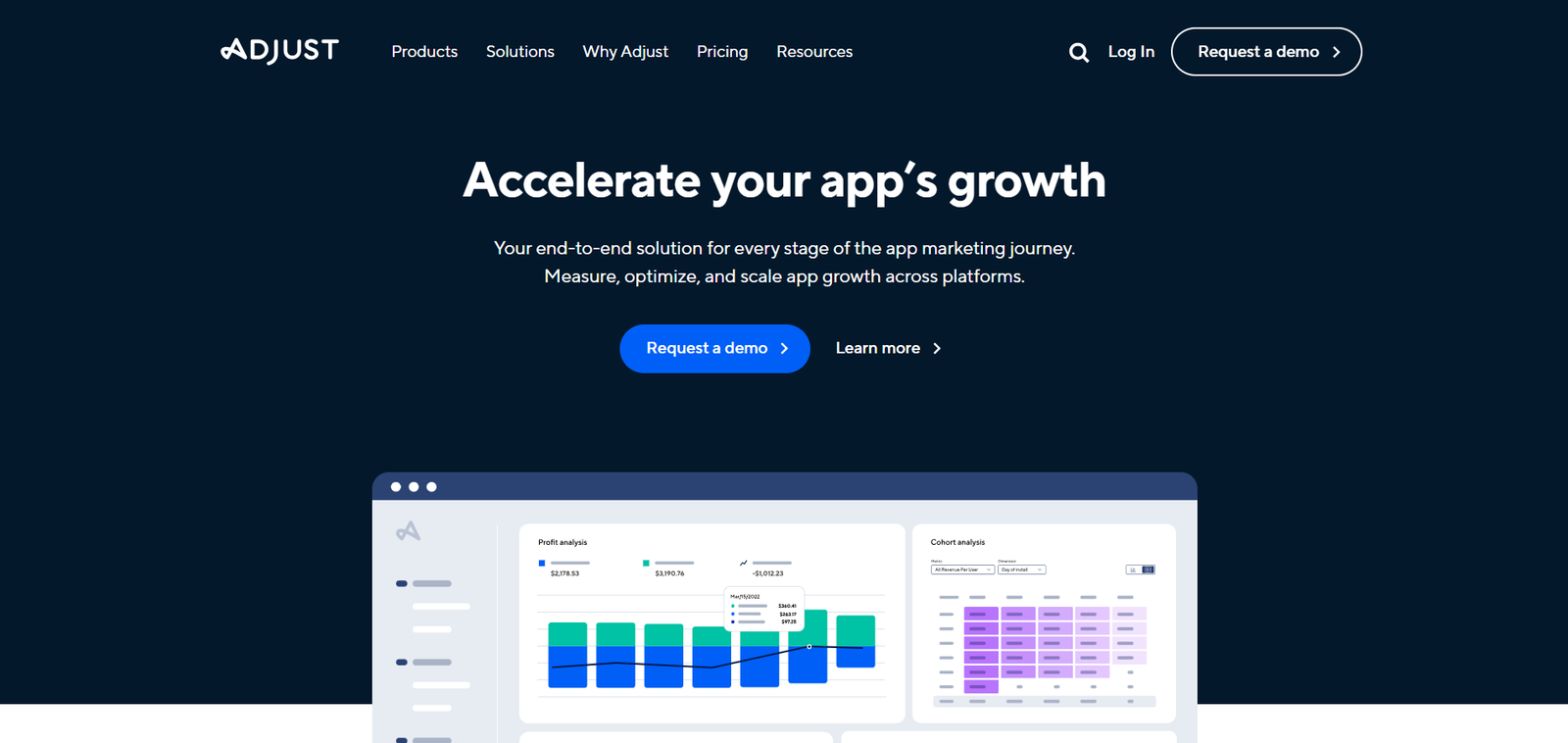
Adjust is a mobile measurement and analytics platform that helps app teams track attribution, optimize campaigns, and scale user acquisition across mobile, web, CTV, and PC/console environments using real-time, privacy-compliant data.
It focuses on giving marketing and product teams a unified view of user journeys, from first install to long-term revenue impact.
Key Features of Adjust
- Attribution & Measurement: Tracks clicks, installs, and post-install events across channels to identify which campaigns drive real user growth.
- Deep Linking: Enables direct and deferred deep links that guide users into specific in-app experiences, improving conversion rates and retention.
- SKAN & iOS Measurement: Provides SKAN-ready solutions for iOS attribution, helping marketers maintain visibility after privacy changes.
- Fraud Prevention: Detects and blocks invalid traffic, protecting budgets and ensuring marketing performance data stays accurate.
- Analytics & Reporting: Offers Datascape dashboards, LTV tracking, retention insights, and raw data access for deep performance analysis.
- Growth Automation Tools: Includes campaign automation, audience building, and optimization tools to scale acquisition efficiently.
Pricing
- Base: Free plan supporting up to 1,500 monthly attributions with basic measurement and email support for small developers.
- Core: Designed for growing teams, includes up to 250,000 annual attributions with advanced reporting and support.
- Enterprise: Custom pricing for large-scale apps requiring high-volume attribution, fraud protection, and dedicated support teams.
9. Kochava

Kochava is an omnichannel measurement and analytics platform that helps marketers track attribution, optimize campaigns, and unify user data across mobile, web, CTV, OTT, and other connected environments using real-time, privacy-safe measurement.
It focuses on giving advertisers and publishers a complete view of performance, from acquisition to retention, while improving ROI through advanced analytics and fraud protection.
Key Features of Kochava
- Omnichannel Attribution: Tracks user journeys across mobile, web, CTV, and other devices to connect installs, engagement, and revenue accurately.
- Real-Time Analytics: Provides live reporting and performance insights to help teams react quickly to campaign changes and optimize spend.
- Deep Linking & SmartLinks: Directs users into relevant in-app or web experiences using SmartLinks, QR codes, and universal links for better conversion.
- Fraud Prevention: Uses AI-powered systems to detect invalid traffic and protect marketing budgets from fraudulent activity.
- Identity Resolution (IdentityLink®): Connects user behavior across devices to build a unified cross-platform customer identity.
- Marketing Mix Modeling: Supports advanced measurement techniques like MMM and incrementality testing for better budget allocation decisions.
Pricing
Kochava offers a Free App Analytics® plan at $0 per month, which includes up to 10K conversions monthly along with attribution, SKAN support, deep linking, and fraud prevention tools.
The Foundation plan starts at $500 per month with 33K conversions monthly and adds advanced reporting, cost aggregation, and IdentityLink®. For larger teams, the Enterprise plan starts at $2,000 per month with 200K MAU monthly and includes full omnichannel measurement, AI churn prediction, and stronger fraud controls.
10. CleverTap
CleverTap is an all-in-one customer engagement platform that helps game teams understand behavior, personalize experiences, and improve lifetime value across campaigns. For gaming teams, it shows which players return, which segments respond, and which messages lift retention and conversion.
It combines analytics, segmentation, experimentation, and omnichannel messaging so studios can act on player data faster and with less manual effort.
Key Features of CleverTap
- Behavioral Analytics: Tracks events, funnels, sessions, trends, and uninstall behavior to reveal how players interact with your game.
- Unified User Profiles: Combines activity, preferences, and profile data into one view, making player analysis more precise and actionable.
- Segmentation: Groups users by behavioral, psychographic, and live activity signals, helping teams target the right players at the right moment.
- Campaign Orchestration: Builds journeys with push, in-app, email, SMS, WhatsApp, and web messaging to drive stronger engagement.
- Experimentation & Optimization: Supports message A/B tests, best-time delivery, and product experiences to improve campaign and gameplay results.
Pricing
CleverTap’s entry pricing starts at $75 per month with up to 5,000 MAU under its Essentials plan. The platform scales into more advanced tiers with deeper analytics, more automation, and add-ons for messaging, product experiences, and lifecycle optimization.
Also Read: 5+ Best Video Game Marketing Campaigns To Get Inspiration
How to Choose the Right Game Analytics Tool for Your Game?
Choosing the right game analytics tools depends on how well they align with your game’s scale, goals, and data workflows.
The best game analytics tools are not universal, so identifying your primary use case ensures you avoid unnecessary complexity early.
What should you evaluate first?
- Game Type & Platform Fit: Choose gaming analytics platforms that support your platform, whether mobile, PC, console, or cross-platform, without heavy technical adjustments.
- Core Use Case: Define whether you need game data analytics for player behavior, attribution, monetization, or engagement before selecting any platform.
- Data Depth vs Simplicity: Some player analytics tools offer deep analysis with complexity, while others provide faster insights with simpler dashboards and easier adoption.
- Real-Time Capabilities: If your game relies on LiveOps or updates, prioritize mobile game analytics tools that deliver real-time tracking and instant insights.
- Integration Ecosystem: Ensure your selected game analytics tools integrate smoothly with ad networks, CRMs, and backend systems without heavy engineering effort.
- Pricing Scalability: Choose gaming analytics platforms that scale pricing with your growth, avoiding sudden cost spikes as player data and usage increase.
Here’s a quick glimpse of the perfect game analytics tool you should choose according to different needs:
| Selection Criteria | Best Game Analytics Tool You Should Pick |
| Early-stage games | Free game analytics tools like GameAnalytics or Firebase Analytics |
| Growth-stage games | Mixpanel or Amplitude for deeper player analytics and experimentation |
| Live-service games | PlayFab or ByteBrew for real-time analytics and LiveOps control |
| Marketing-focused games | AppsFlyer or Adjust for attribution, ROAS tracking, and campaign optimization |
Note: Make sure to check official pricing and match it with your needs so you do not compromise on scalability or required features later.
Choosing the wrong game analytics tools increases data confusion, slows decisions, and creates unnecessary dependency on engineering teams for insights.
Therefore, selecting the right game analytics tools becomes important as it simplifies decision-making, improves player retention, and helps teams scale gameplay systems with confidence.
Final Thoughts
Picking the right game analytics tool is only the first step; the real outcome depends on choosing the right KPIs.
Here are some gaming KPI articles you can explore if you want to track the metrics that matter most:
- 13 Top Mobile Game KPIs That Decide Your Game’s Worth
- 12 Video Game Metrics That Define Game Success in 2026
Start with retention, engagement, and monetization metrics, because those three usually reveal whether your game is growing or leaking players.
Once your KPIs are clear, select a tool that tracks them cleanly, reports them fast, and supports future scale.