Playable ads have become one of the most effective advertising formats for mobile games because they let users experience gameplay before installing. This interactive approach helps players make informed download decisions.
Unlike static banners or standard video ads, playable ads encourage users to actively engage with a game’s mechanics through a short, hands-on experience. That interaction creates stronger interest and sets clearer gameplay expectations.
As more game studios prioritize user quality over download volume, playable ads are becoming a core part of successful user acquisition strategies. They improve campaign performance while attracting players with genuine gameplay interest.
In this guide, you’ll learn what playable ads are, how they work, their different types, where to run them, and best practices for creating high-performing campaigns.
What Are Playable Ads?
Playable ads are interactive ad units that let users try a short, simplified version of a game before installing it.
Instead of watching a video, players tap, swipe, or interact with the ad to experience the core gameplay first.
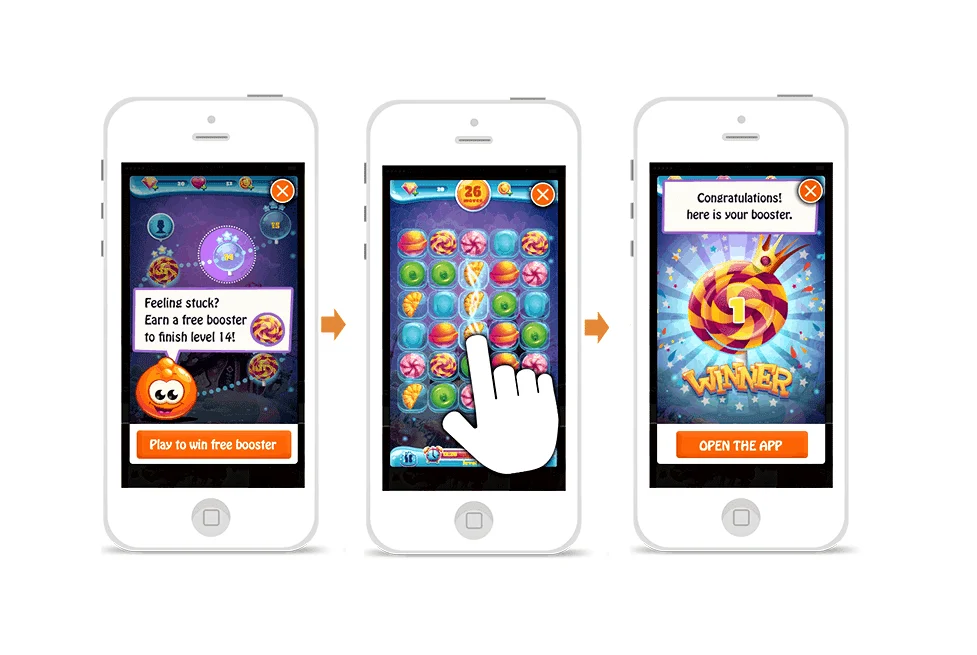
This format gives users a clearer idea of the game’s controls and feel, making the ad more relevant and easier to understand.
In mobile game marketing, playable ads are used to show the actual gameplay experience in a fast, interactive way.
How Do Playable Ads Work?
Playable ads are designed to let users experience a game’s core mechanic before deciding whether to install it. Instead of asking players to trust screenshots or videos, the advertisement demonstrates the gameplay through a short interactive session.
Most playable ads last between 15 and 60 seconds and are carefully structured to move users from curiosity to interaction, then from interaction to installation. Although every game is different, high-performing playable ads generally follow the same three-step framework.
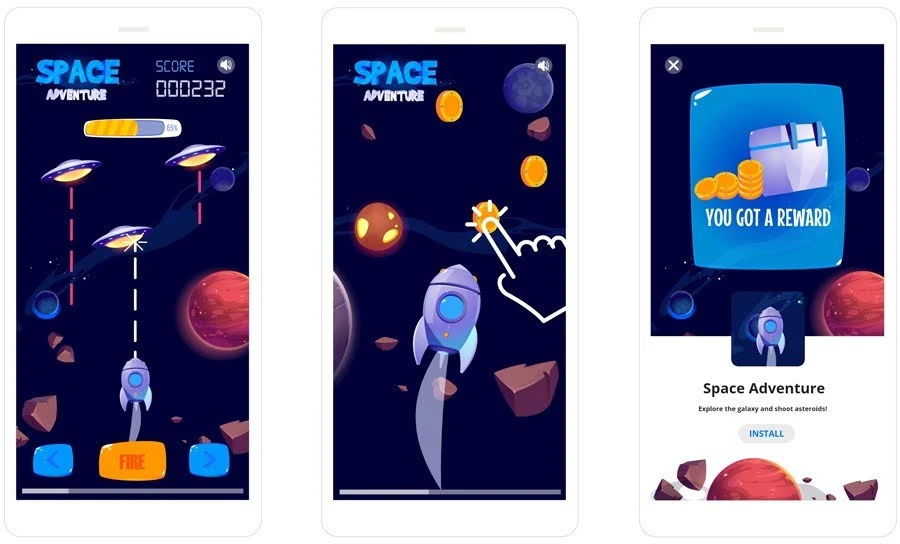
The Tutorial Hook
The first few seconds determine whether users continue interacting or close the advertisement. To reduce friction, playable ads begin with a simple tutorial that introduces one or two controls using clear visual prompts.
Rather than explaining every mechanic, the tutorial focuses on a single action such as dragging, tapping, aiming, or matching. This allows users to start playing almost immediately without feeling overwhelmed.
A strong tutorial should help players understand the controls within five seconds. The faster they begin interacting, the more likely they are to complete the playable experience.
Core Gameplay
Once users understand the controls, the ad transitions into the game’s most engaging mechanic. This is the moment where developers showcase the experience that convinces players the game is worth downloading.
Instead of recreating an entire level, marketers usually highlight one satisfying gameplay loop. Whether solving a puzzle, defeating enemies, building structures, or completing a challenge, the objective is to create a quick sense of achievement.
This section should feel authentic to the real game. If the playable experience differs significantly from the actual gameplay, users may install the game but abandon it quickly after discovering the mismatch.
End Card and CTA
After the gameplay ends, users are shown an end card featuring the game’s branding, value proposition, and a clear install button. This is where engagement turns into conversion.
High-performing end cards often reinforce the experience users just enjoyed with messaging such as “Continue Playing,” “Beat the Next Level,” or “Download Now.” The goal is to maintain momentum instead of interrupting it.
When all three stages work together, playable ads qualify users before installation. Players who choose to download have already experienced the gameplay, making them more likely to engage with the game after installing.
Types of Playable Ads
Not every game is marketed the same way, and neither is every playable ad. The best playable ad format depends on your game’s mechanics, campaign objective, target audience, and the experience you want users to have before installing.
Some games need players to interact immediately, while others benefit from building excitement through visuals before introducing gameplay. To support these different goals, playable ads for mobile games are generally created in two primary formats.
1. HTML5 Playable Ads
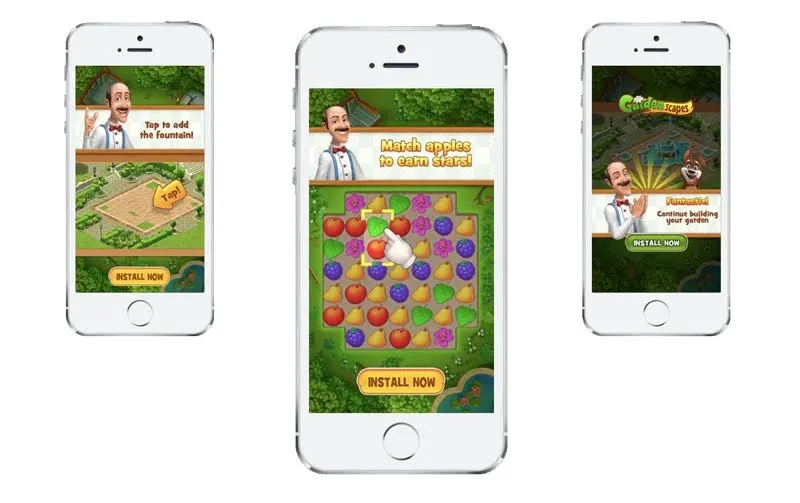
HTML5 playable ads are the most common type of interactive ads for games. They allow users to play a lightweight version of the game directly within the advertisement without downloading the app.
Instead of recreating the complete game, developers build a short interactive demo that highlights one engaging gameplay mechanic. This keeps the experience simple, responsive, and focused on encouraging qualified installs.
Because these ads run inside a mobile browser or app environment, they load quickly and work across most advertising platforms. Their speed and accessibility make them a preferred choice for user acquisition campaigns.
HTML5 playable ads are commonly used for:
| Game Type | Why They’re Effective |
| Puzzle Games | Demonstrate simple mechanics that users can understand within seconds. |
| Hyper-Casual Games | Showcase instant gameplay that encourages immediate interaction. |
| Simulation Games | Introduce core activities through a guided mini experience. |
| Casual Games | Give players an authentic preview before downloading the full game. |
2. Interactive Video Ads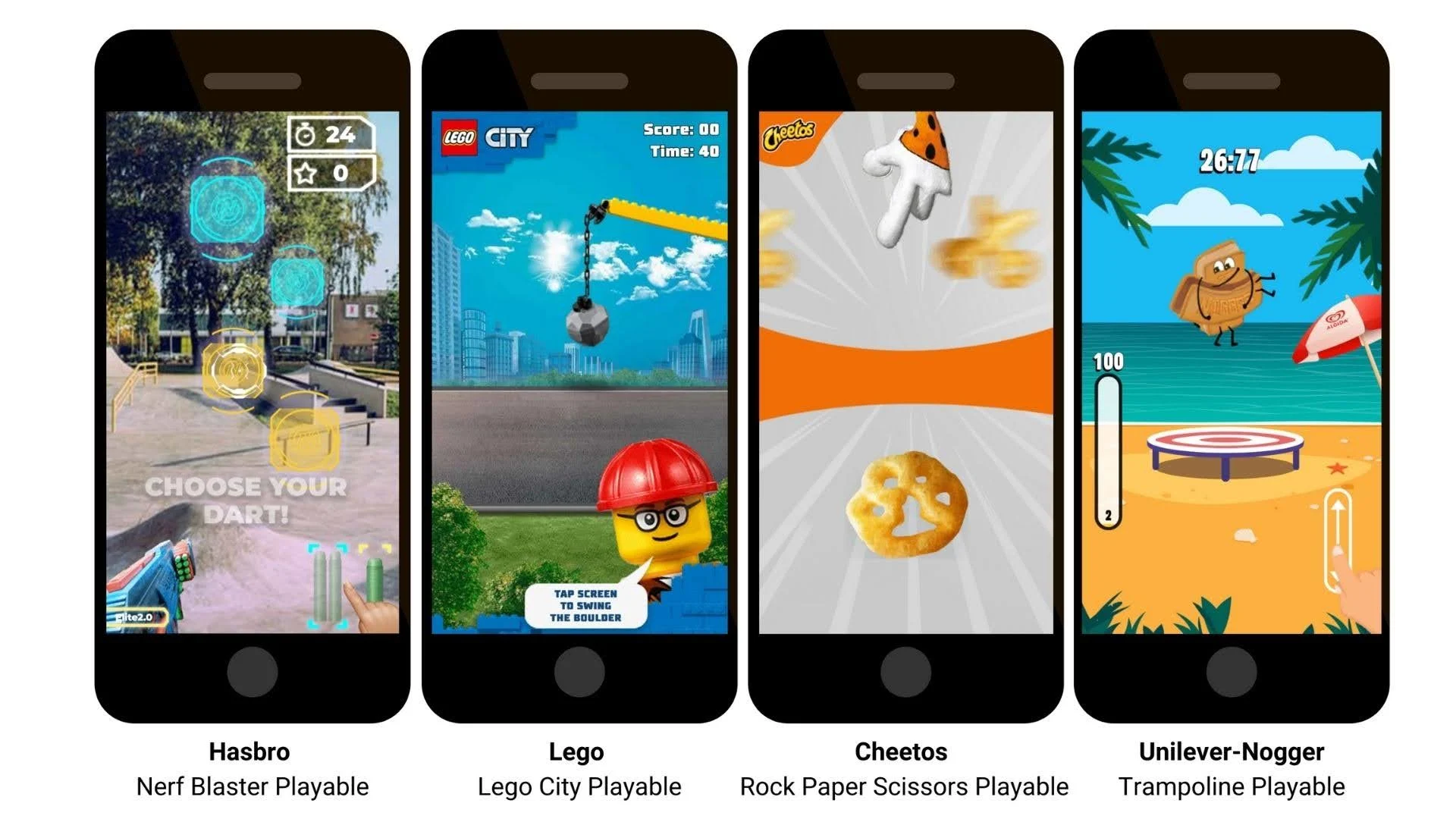
Unlike HTML5 experiences, interactive video ads begin with a video before asking users to participate. This format combines visual storytelling with gameplay, creating a more guided introduction to the game.
After watching a short sequence, users may tap, swipe, solve a challenge, or complete a simple objective before reaching the install screen. The interaction is shorter than a full playable but still gives users an active role.
Interactive video ads work particularly well for games that rely on characters, storylines, or cinematic visuals before introducing gameplay. They help marketers explain the game’s context without sacrificing engagement.
Both formats serve different purposes, but their objective remains the same: helping players experience the game before installing. Choosing the right playable ads format depends on which approach best communicates your game’s strongest selling point.
Why Are Playable Ads Better Than Traditional Ad Formats?
Every day, mobile game marketers invest thousands of dollars into user acquisition campaigns across platforms like Meta, Google Ads, Unity Ads, and AppLovin. Yet attracting installs is only half the challenge, because not every install becomes an engaged player.
Traditional banners and video advertisements can showcase a game’s visuals, but they cannot replicate the actual gameplay experience. As a result, many users install games with expectations that don’t always match reality, leading to lower engagement and higher uninstall rates.
This is where playable ads make a significant difference. Instead of asking users to watch gameplay, they invite them to experience it firsthand. That single interaction helps players decide whether the game genuinely interests them before they ever visit the app store.
For mobile game studios, this creates a more qualified acquisition funnel. Rather than optimizing campaigns for download volume alone, playable ads for mobile games help attract users who already understand the gameplay and are more likely to continue playing after installation.
Here are the biggest reasons why playable ads outperform traditional advertising formats:
- They attract higher-quality players: Users download the game after trying it, making installs more intentional and reducing the number of low-intent users.
- They improve conversion rates: Interactive experiences build confidence before installation, encouraging more users to complete the journey from advertisement to app store.
- They reduce wasted advertising spend: Players who don’t enjoy the gameplay leave before installing, allowing marketing budgets to focus on genuinely interested audiences.
- They increase player retention: Since the advertisement reflects the real gameplay experience, users arrive with realistic expectations and are more likely to stay engaged.
- They generate deeper engagement: Unlike traditional creatives, interactive ads for games encourage tapping, swiping, and decision-making, creating a memorable first impression.
- They provide richer campaign insights: Marketers can analyze gameplay interactions, completion rates, and drop-off points to continuously improve future creative performance.
As competition for mobile game installs continues to grow, success depends on attracting players who enjoy your game, not simply increasing download numbers. That’s exactly why playable ads have become one of the most effective user acquisition formats for modern game marketing.
Where Can You Run Playable Ads?
Every mobile game attracts a different audience, which means no single advertising platform delivers the best results for every campaign. The network you choose can significantly influence install quality, campaign performance, and overall return on ad spend.
Fortunately, most leading advertising platforms now support playable ads for mobile games, giving developers multiple ways to reach players before they install. Each platform offers different targeting capabilities, ad placements, and optimization features that suit different marketing objectives.
Rather than relying on a single network, successful game marketers often test playable ads across multiple platforms, compare campaign performance, and gradually scale the channels delivering the highest-quality users.
Let’s explore the most popular platforms for running playable ads:
1. Meta (Facebook and Instagram)
Meta remains one of the largest advertising platforms for mobile games, allowing developers to run playable ads across Facebook, Instagram, Audience Network, and other supported placements.
Its advanced audience targeting helps marketers reach players based on interests, demographics, online behavior, and previous interactions. This makes Meta particularly effective for acquiring new users while continuously optimizing campaign performance.
2. Google Ads (AdMob)
Google Ads enables developers to distribute playable ads for mobile games through App Campaigns and the AdMob network, reaching users across millions of mobile applications.
Google’s machine learning automatically identifies high-converting audiences, adjusts bidding strategies, and optimizes placements, reducing manual campaign management while improving advertising efficiency.
3. AppLovin
AppLovin has become one of the most popular advertising platforms within the mobile gaming industry, connecting game studios with players through an extensive network of gaming applications.
Its optimization technology focuses heavily on user quality, making it a preferred platform for developers looking to scale playable ads while maintaining strong return on advertising spend.
4. Unity Ads
Unity Ads is designed specifically for game developers, making it one of the most suitable platforms for running interactive ads for games.
Because many Unity-powered games already support immersive advertising experiences, playable campaigns often feel like a natural extension of gameplay, resulting in stronger engagement from gaming audiences.
5. TikTok Ads
TikTok has quickly become an important user acquisition channel for mobile games, especially those targeting younger audiences and casual players.
Its content-driven recommendation system helps playable ads reach users who actively engage with gaming content, making it an effective platform for creative campaigns that combine entertainment with interaction.
Choosing where to run playable ads shouldn’t depend on platform popularity alone. The best-performing campaigns come from testing different networks, analyzing player quality, and investing more heavily in the platforms that deliver long-term growth.
How to Create Playable Ads for Your Mobile Game?
Creating playable ads isn’t about shrinking your entire game into a 30-second experience. The goal is to showcase one gameplay moment that quickly demonstrates why players should install your game.
The most effective playable ads for mobile games are simple, interactive, and accurately represent the actual gameplay. Every element, from the tutorial to the call-to-action, should help users understand the game while encouraging them to continue playing.
If you’re wondering how to create playable ads that deliver better installs and player quality, follow these best practices:
1. Choose One Gameplay Loop
Instead of highlighting every feature, identify the gameplay loop that players find most enjoyable and memorable. This becomes the foundation of your playable advertisement.
Whether it’s matching tiles, solving puzzles, defeating enemies, or merging objects, one clear mechanic creates a more engaging first impression than multiple disconnected features.
2. Get Players Into the Game Immediately
Every second before gameplay increases the chance of users leaving the advertisement. Introduce interaction as early as possible instead of showing long logos or cinematic sequences.
As a general best practice, players should understand the controls within the first 3–5 seconds and begin interacting almost immediately.
3. Keep the Experience Short
A playable advertisement should create curiosity, not replace the game itself. Once users experience the core mechanic, encourage them to download the complete version.
Most advertising platforms recommend keeping playable ads between 15 and 60 seconds, depending on the gameplay complexity and campaign objective.
4. Make the Tutorial Effortless
The tutorial should explain only what’s necessary to start playing. Visual cues like animated fingers, arrows, and highlighted buttons help users understand controls much faster than written instructions.
The faster players complete their first successful interaction, the more likely they are to continue engaging with the advertisement.
5. Show the Real Gameplay
Avoid creating a playable experience that differs from the actual game. If players receive something unexpected after installation, retention and long-term campaign performance can suffer.
Your advertisement should accurately represent the game’s mechanics, visuals, and overall experience, creating trust before users even install.
6. Use a Strong Call-to-Action
Once the gameplay ends, don’t leave users wondering what to do next. Present a clear install button with action-oriented messaging that naturally continues the experience.
Simple messages like “Continue Playing,” “Play the Full Game,” or “Download Now” often work better than generic promotional copy.
7. Continuously Test and Improve
The first version of a playable ad is rarely the best-performing one. Small creative changes often lead to meaningful improvements in campaign performance.
Test different gameplay mechanics, tutorial designs, difficulty levels, CTA messaging, and playable durations to identify what delivers the highest-quality users.
Building great playable ads is an ongoing optimization process. The more you test and refine your creatives, the more efficiently you can attract players who genuinely enjoy your game.
Best Practices to Make Your Playable Ads Perform Better
Once your playable ads are ready, the next challenge is improving their performance. These practical recommendations can help you generate higher-quality installs and maximize your advertising budget.
- Capture attention immediately: Give users something to interact with within the first 3–5 seconds. Every additional second before gameplay increases the risk of users leaving the advertisement.
- Focus on one gameplay moment: Resist the temptation to showcase every feature. One satisfying gameplay loop almost always performs better than multiple disconnected mechanics.
- Keep difficulty balanced: The playable should be easy enough for first-time users to complete but engaging enough to create a small sense of achievement before the install prompt.
- Reward users before the CTA: Let players win a level, unlock a reward, or complete an objective before showing the install button. Ending on a positive moment often encourages stronger conversion.
- Design for silent viewing: Many users encounter playable ads for mobile games with their sound turned off. Use animations, icons, and visual feedback instead of relying on audio cues.
- Reduce loading time: Lightweight HTML5 assets improve loading speed, helping users begin interacting faster and reducing early abandonment.
- Make the CTA feel like the next step: Instead of generic messages, use contextual CTAs such as “Continue Your Progress,” “Unlock More Levels,” or “Play the Full Game.”
- Test one variable at a time: Compare tutorials, gameplay mechanics, end cards, CTA messaging, or playable duration individually to identify what actually improves performance.
- Measure player quality, not just installs: A playable ad that delivers fewer installs but stronger retention and higher lifetime value often produces better long-term campaign results.
The highest-performing playable ads aren’t built through guesswork. They’re refined through continuous testing, creative iteration, and player behavior analysis, allowing game marketers to consistently improve campaign performance.
Also Read: Unity Ads vs AdMob: Which Monetization Platform is Better for Your Game in 2026?
Conclusion
Mobile game marketing has become increasingly competitive, and getting users to install a game is no longer the real challenge. The real challenge is getting players who stay and engage.
This is where playable ads for mobile games started to play a crucial role. By letting users experience gameplay before installing, they help studios attract higher-quality users and improve overall campaign performance.
Therefore, understanding what are playable ads to learning how to create playable ads, every step in this guide shows how interactive formats can significantly improve user acquisition results.
If you’re ready to scale better campaigns and improve player quality, playable ads can become one of the most effective tools in your mobile game marketing strategy. Contact Bizzware to connect with a game marketing expert.